 In the crowded digital marketplace, simply posting a photo of a cocktail is no longer enough to capture attention. For small bars and emerging liquor brands, a well-executed ad campaign can be the difference between a quiet Tuesday and a packed house. But with the constant evolution of social platforms, knowing where to invest your advertising budget can be a challenge. The strategies that worked last year may fall flat today, making a targeted approach essential for seeing a real return.
This guide cuts through the noise. We've compiled 9 powerful and practical social media advertising strategies tailored specifically for the unique needs of the beverage industry. Each tactic is designed to be actionable, moving beyond generic advice to provide concrete steps, real-world examples, and expert tips to help you attract more customers and build a loyal following. These paid strategies are most effective when built upon a solid organic foundation. To lay a strong foundation for your bar's online presence, consider developing a comprehensive social media marketing strategy first.
Let's dive into the essential advertising tactics that will define your brand's digital presence and help you pour your way to success.
1. Influencer Partnership Marketing
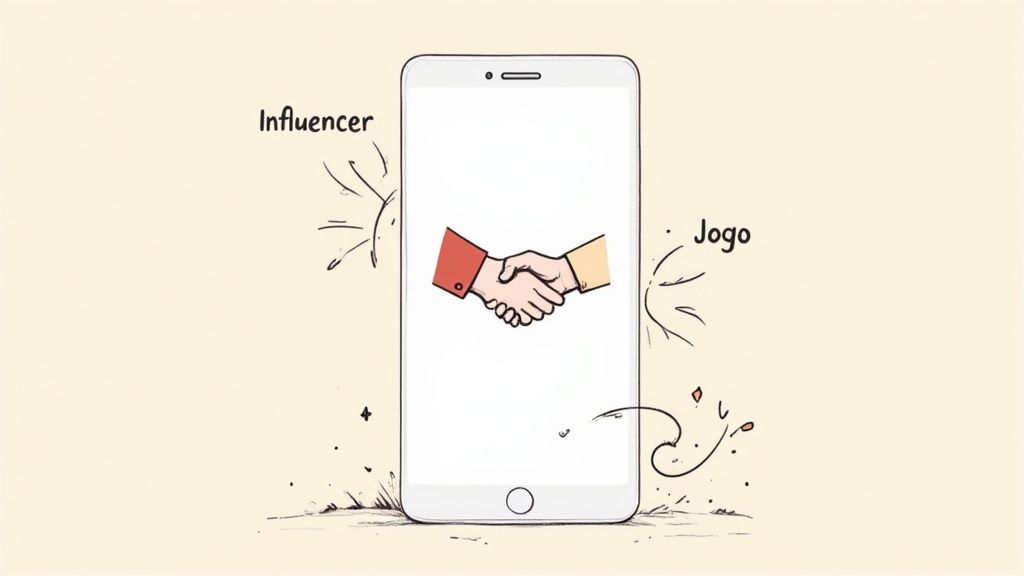
Influencer partnership marketing is a powerful strategy where brands collaborate with social media personalities to promote their products. This approach leverages the influencer's credibility and established relationship with their audience, creating a channel for authentic endorsements. For bars and liquor brands, this means tapping into a pre-built community of potential customers who trust the influencer's recommendations, making it one of the most effective social media advertising strategies available.
Instead of a direct ad, the promotion feels like a genuine suggestion from a trusted source. This method is particularly effective for reaching niche audiences, whether it's local foodies, craft cocktail enthusiasts, or nightlife aficionados. The key is finding an influencer whose followers match your ideal customer profile.
Why It Works for Bars and Liquor Brands
This strategy excels at building brand awareness and driving foot traffic. A local lifestyle influencer posting about your new signature cocktail or a special event can generate immediate interest. It circumvents the skepticism often associated with traditional ads, as the message is delivered by a relatable personality. Brands like Gymshark and Daniel Wellington built their empires almost entirely on this model, proving its scalability.
How to Implement This Strategy
To get started, focus on finding the right partners and setting clear goals.
- Identify Relevant Influencers: Look for local or niche influencers whose audience aligns with your target demographic. Prioritize high engagement rates over a massive follower count; micro-influencers often have more dedicated communities.
- Define Campaign Goals: Are you aiming to promote a new menu, increase ticket sales for an event, or boost brand awareness? Establish clear Key Performance Indicators (KPIs) like engagement, reach, or redemptions of a unique promo code.
- Grant Creative Freedom: While providing brand guidelines, allow the influencer creative control over the content. This ensures the promotion feels authentic to their style and resonates with their audience. For more insights on this, explore these game-changing social media strategies for bars.
- Track and Measure: Use unique discount codes, custom UTM parameters in links, or a special "mention this post" offer to track the campaign's direct impact on sales and foot traffic.
2. Video-First Content Strategy
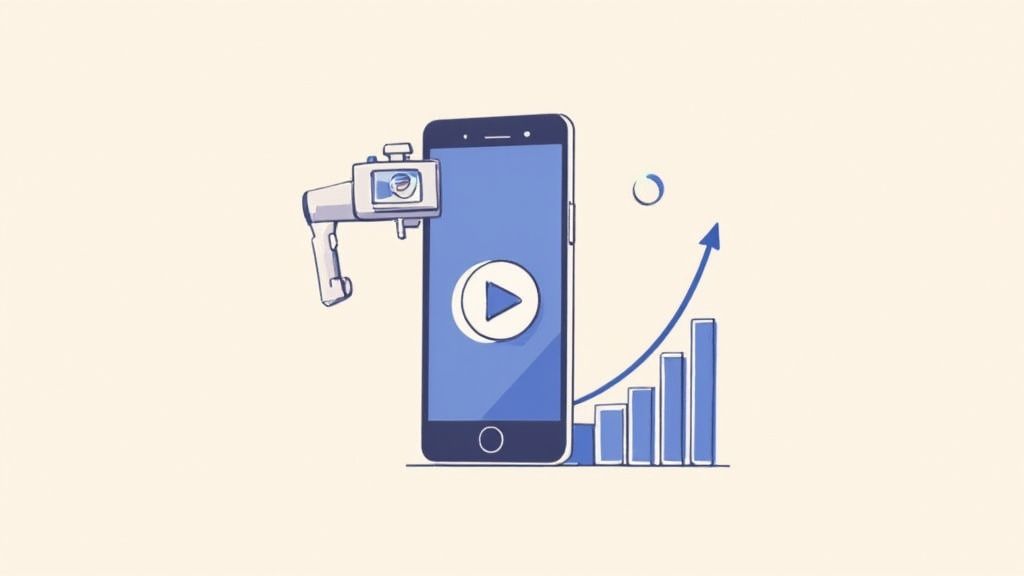
A video-first content strategy prioritizes creating and distributing video content across social media channels. This approach recognizes that video consistently generates higher engagement, better retention, and superior performance within platform algorithms. For bars and liquor brands, this means showcasing your atmosphere, cocktails, and events in a dynamic format that captures attention far more effectively than static images, making it one of the most essential social media advertising strategies today.
This strategy moves beyond occasional video posts to make it the core of your content plan. It encompasses everything from short, engaging Reels and TikToks showing a cocktail being made to longer-form content like bartender interviews or event recaps. The goal is to tell your brand’s story in a visually compelling way that stops users from scrolling.
Why It Works for Bars and Liquor Brands
Video content excels at conveying the vibe and experience of your establishment. A well-shot video can make viewers feel like they are already there, enticing them to visit. It’s perfect for demonstrating the craft behind a signature drink, showcasing live music, or highlighting a bustling happy hour. Brands like Blendtec with their "Will It Blend?" series proved that creative video can turn a mundane product into a viral sensation.
How to Implement This Strategy
A successful video strategy is about more than just hitting "record." It requires planning and optimization.
- Hook Viewers Immediately: The first three seconds are critical. Start with a visually arresting shot, like a colorful ingredient being poured or a garnish being flamed, to capture attention instantly.
- Optimize for Mobile and Silent Viewing: Most social media video is watched on mobile devices, often without sound. Use vertical formatting and add clear, easy-to-read captions or subtitles to ensure your message gets across.
- Invest in Good Audio: For videos where sound is key, like bartender tutorials or interviews, clear audio is non-negotiable. A simple lavalier microphone can dramatically improve quality.
- Include a Clear Call-to-Action (CTA): End each video by telling viewers what to do next. This could be "Book your table now," "Try our new cocktail special tonight," or "Tag a friend who needs this."
<iframe width="560" height="315" src="https://www.youtube.com/embed/1WTD-V2F_N8" frameborder="0" allow="accelerometer; autoplay; clipboard-write; encrypted-media; gyroscope; picture-in-picture" allowfullscreen></iframe>
3. User-Generated Content Campaigns
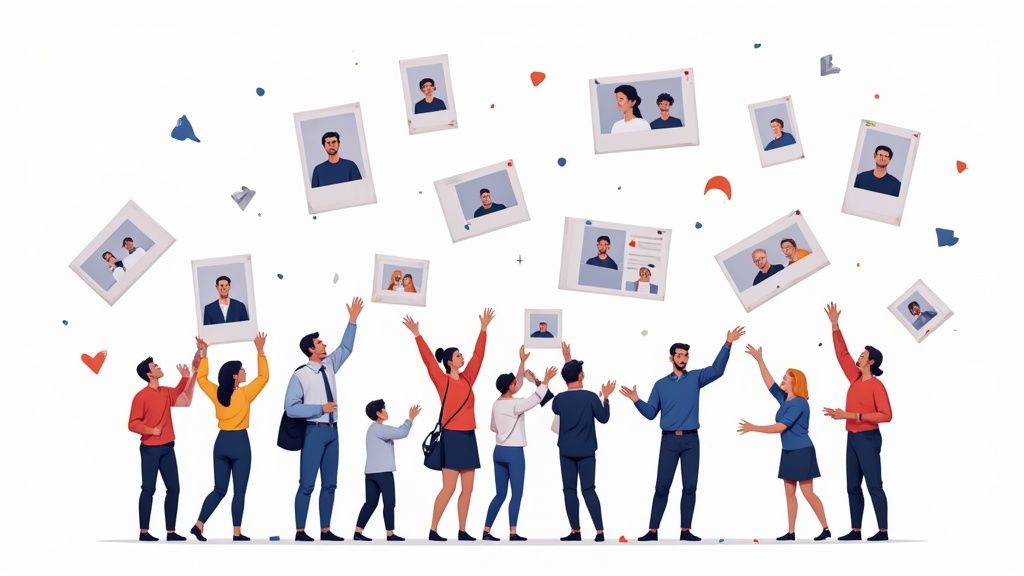
User-Generated Content (UGC) campaigns encourage customers to create and share content featuring your brand. This strategy turns your patrons into brand advocates, leveraging their authentic experiences to build trust and social proof. For bars and liquor brands, this creates a powerful, cost-effective stream of marketing material that feels genuine and relatable, solidifying its place among the top social media advertising strategies.
Instead of your brand telling people how great your drinks are, your customers do it for you. This approach fosters a strong sense of community and boosts engagement, as people are more likely to trust recommendations from peers than from the brand itself. Campaigns like Coca-Cola's "Share a Coke" or Starbucks' annual #RedCupContest are prime examples of this model's success.
Why It Works for Bars and Liquor Brands
UGC is exceptionally effective for showcasing your establishment's atmosphere and offerings in an authentic light. When a customer posts a photo of their beautifully crafted cocktail or a video of a lively Saturday night at your bar, it serves as a powerful, unbiased testimonial. This content is not only free marketing but also provides valuable insights into what your customers enjoy most about their experience.
How to Implement This Strategy
A successful UGC campaign is built on clear incentives and easy participation.
- Create a Branded Hashtag: Develop a simple, memorable hashtag for your campaign, like #YourBarNameNights or #SignatureCocktailName. Promote it on menus, coasters, and in-venue signage.
- Offer Compelling Incentives: Run a contest where the best photo of the month wins a gift card, a free bottle, or is featured on your social media pages. Recognition is often as powerful a motivator as a prize.
- Engage and Showcase Submissions: Actively like, comment on, and share user posts. Create a dedicated "Highlights" reel or a weekly feature on your feed to showcase the best customer content, making them feel valued.
- Repurpose Content: Always ask for permission, then repurpose high-quality UGC across your website, email newsletters, and even in-venue digital displays to maximize its impact. To further develop your approach and encourage authentic customer advocacy, explore various platforms' capabilities and Winning Strategies for User-Generated Content Campaigns.
4. Hyper-Targeted Audience Segmentation
Hyper-targeted audience segmentation is an advanced advertising approach that moves beyond broad demographics. It involves dividing your potential customers into highly specific groups based on detailed behavioral, psychographic, and geographic data to deliver personalized ad campaigns. For bars and liquor brands, this means you stop showing a generic happy hour ad to everyone and start showing a craft beer special to users who follow local breweries or a whiskey tasting event to those who engage with spirits content.
This strategy maximizes ad relevance and return on investment by ensuring your message reaches the precise individuals most likely to convert. Instead of shouting into the void, you're having a direct conversation with a finely-tuned audience, making it one of the most cost-effective social media advertising strategies for a limited budget.

Why It Works for Bars and Liquor Brands
This strategy is powerful because it boosts ad performance by increasing relevance. When an ad speaks directly to a user's interests, like promoting a new tequila to someone who recently engaged with margarita recipes, the click-through and conversion rates skyrocket. Giants like Amazon and Netflix use this model to power their recommendation engines, proving its effectiveness in driving user action. For a local bar, this means more efficient ad spend and a higher likelihood of turning a social media user into a paying customer.
How to Implement This Strategy
Success with this strategy depends on data-driven precision and continuous refinement.
- Create Detailed Buyer Personas: Go beyond age and location. What are their hobbies? What other local businesses do they follow? What type of content do they engage with? Use these personas to build your audience segments on platforms like Facebook and Instagram.
- Leverage First-Party Data: Use your existing customer data, such as email lists or loyalty program members, to create "Lookalike Audiences." This allows platforms to find new users who share characteristics with your best customers.
- Test and Refine: Start with broader segments and narrow them down based on campaign performance. Test different ad creatives and messaging for each segment to see what resonates most. For example, a "date night" segment might respond better to cocktail imagery, while a "sports fans" segment might prefer beer specials.
- Use Exclusion Targeting: Prevent ad fatigue by excluding recent visitors or existing loyal customers from general awareness campaigns. This saves money and keeps your messaging fresh for different stages of the customer journey.
5. Social Commerce Integration
Social commerce integration is a strategy that transforms social media platforms from discovery channels into direct points of sale. It allows users to browse, select, and purchase products like craft spirits, bar merchandise, or cocktail kits directly within their social feed, eliminating the need to visit a separate website. This approach shortens the customer journey, reduces friction, and capitalizes on the impulse-driven nature of social media scrolling, making it one of the most direct social media advertising strategies for driving revenue.
By embedding a native shopping experience into platforms like Instagram, Facebook, and TikTok, you meet customers where they are already engaged. For a liquor brand, this could mean a user sees a post featuring a new gin, taps a product tag to view details, and completes the purchase all without ever leaving the app.
Why It Works for Bars and Liquor Brands
This strategy is exceptionally effective for converting interest into immediate sales. When a customer sees an enticing cocktail recipe or a limited-edition bottle release, social commerce allows them to act on that desire instantly. It’s perfect for selling branded merchandise, cocktail-making kits, gift cards, or even tickets to a special tasting event. The seamless process significantly boosts conversion rates by removing extra steps where potential buyers might drop off.
How to Implement This Strategy
Successful social commerce requires a well-managed digital storefront and compelling content.
- Set Up Your Social Shops: Integrate your product catalog with platforms like Instagram Shopping, Facebook Shops, or TikTok Shop. Ensure your product listings are complete with high-quality images, accurate descriptions, and correct pricing.
- Use Shoppable Tags and Stickers: Regularly create posts, stories, and reels featuring your products and use shoppable tags. This makes your content interactive and provides a direct path to purchase. For example, tag the specific brand of whiskey used in a video of your bartender making an Old Fashioned.
- Optimize Product Imagery for Social: Use lifestyle-focused photos and videos that show your products in an appealing context, such as a beautifully garnished cocktail or a group of friends enjoying a particular spirit.
- Run Exclusive Social Offers: Drive urgency and sales by offering special discounts or limited-edition products available only through your social media shops. Track performance by monitoring click-through rates, add-to-cart actions, and completed purchases directly within the platform's analytics.
6. Community Building and Engagement
Community building and engagement is a long-term strategy focused on nurturing an active group of followers around your brand. This approach prioritizes meaningful interactions and shared value over direct sales pitches, fostering genuine relationships that turn customers into loyal advocates. For bars and liquor brands, it means creating a space where patrons feel like they belong, which is a key differentiator in a crowded market and one of the most sustainable social media advertising strategies.
Instead of just broadcasting promotions, this method involves sparking conversations, sharing behind-the-scenes content, and encouraging user-generated content. Brands like Peloton have mastered this by creating a passionate community around a shared lifestyle, proving that a strong community can become a brand's most powerful asset.
Why It Works for Bars and Liquor Brands
This strategy builds unparalleled brand loyalty and a steady stream of repeat business. When patrons feel connected to your bar, they become regulars and brand ambassadors, bringing friends and defending your reputation online. A strong community also provides invaluable feedback, helping you refine your offerings and events to better meet customer desires. It transforms your social media page from an advertisement into a vibrant social hub.
How to Implement This Strategy
Success in community building requires consistency and a genuine desire to connect with your audience.
- Establish a Group or Hub: Create a dedicated Facebook Group or a unique hashtag on Instagram for your most loyal patrons. This provides an exclusive space for conversation and special offers.
- Provide Consistent Value: Share cocktail recipes, host virtual tasting sessions, or feature bartender spotlights. Give people a reason to engage beyond just seeing your happy hour specials.
- Encourage Member Interaction: Pose questions, run polls, and create contests that prompt followers to share their own experiences or photos at your establishment. Celebrate and reshare the best user-generated content.
- Listen and Adapt: Actively monitor conversations to understand what your community loves and what they want to see improved. Responding to feedback shows you value their input and strengthens your online reputation. For more on this, check out these essential online reputation management tips for 2025.
7. Cross-Platform Retargeting Campaigns
Cross-platform retargeting is an advanced strategy where you track users who have interacted with your brand on one platform and then serve them coordinated ads on another. This approach creates a seamless brand experience, reminding potential customers of your bar or liquor brand as they move between apps like Facebook, Instagram, and even Google. It’s one of the most powerful social media advertising strategies for staying top-of-mind with an already interested audience.
Instead of just showing the same ad everywhere, this method allows you to continue the conversation in a context-appropriate way. A user who watched a cocktail-making video on your Facebook page might later see a stunning photo of that same drink in their Instagram feed, reinforcing their initial interest and guiding them toward a visit or purchase.
Why It Works for Bars and Liquor Brands
This strategy is highly effective for converting warm leads into paying customers. Someone who visited your website to check out your happy hour menu is a prime candidate for a retargeting ad on Instagram Stories showcasing the vibrant atmosphere of your bar that evening. It keeps your brand visible during the crucial decision-making process, turning initial curiosity into action. Big e-commerce brands have perfected this model to recover abandoned carts, and the same principle applies to converting website visitors into bar patrons.
How to Implement This Strategy
A successful campaign requires careful planning and precise execution.
- Map the Customer Journey: Identify key touchpoints, like website visits, video views, or event page interactions. Plan a sequence of ads that aligns with each stage, gently nurturing interest without being intrusive.
- Use Platform-Specific Creative: While maintaining brand consistency, adapt your ad creative for each platform. Use high-quality images for Instagram, engaging short videos for TikTok or Reels, and event-focused ads for Facebook.
- Set Frequency Caps: To avoid annoying potential customers, limit the number of times a person sees your ads within a certain period. Ad fatigue is real and can harm your brand perception.
- Exclude Converted Customers: Once a user has taken the desired action, such as booking a table or buying a ticket, remove them from your retargeting audience to avoid wasting your ad budget. To dive deeper into this, explore these insights on how to measure marketing campaign success.
8. Real-Time Social Listening and Response
Real-time social listening is a proactive strategy where brands monitor social media for mentions, keywords, and conversations relevant to their business. This approach allows bars and liquor brands to engage directly with customers, manage their reputation, and uncover valuable insights. It transforms social media from a simple broadcast tool into a dynamic two-way communication channel, making it one of the most agile social media advertising strategies for staying relevant.
Instead of just pushing out content, you are actively participating in the conversation. This means you can address customer service issues before they escalate, thank a patron for a positive post, or join a trending local discussion. This responsiveness builds a strong community and shows customers that you are paying attention.
Why It Works for Bars and Liquor Brands
This strategy excels at building brand loyalty and managing public perception. A quick, helpful response to a customer's question or a witty reply to a local tweet can generate significant positive sentiment. It allows you to control the narrative and capitalize on spontaneous opportunities, much like Oreo's famous "Dunk in the Dark" tweet during the Super Bowl blackout. For a local bar, this could be as simple as responding to someone asking for "the best happy hour nearby."
How to Implement This Strategy
To get started, you need to set up a monitoring system and establish clear guidelines for engagement.
- Set Up Keyword Tracking: Use social media management tools to set up alerts for your brand name, common misspellings, competitor names, and relevant local keywords like "cocktails in [Your City]" or "best bar for a date night."
- Establish Response Protocols: Create a clear plan for who responds, how quickly, and what the brand voice should sound like. Develop templates for common inquiries but empower your team to personalize each interaction.
- Monitor Industry Trends: Keep an eye on what your competitors and industry leaders are doing. Listening to these conversations can provide inspiration for new drink specials, events, or content ideas.
- Engage Proactively: Don’t just wait for direct mentions. If you see someone celebrating a promotion or birthday online, invite them to your bar for a celebratory drink. This type of proactive engagement creates memorable customer experiences.
9. Interactive and Gamified Content
Interactive and gamified content is a dynamic engagement strategy that transforms passive scrolling into an active brand experience. This approach uses quizzes, polls, contests, and other game-like elements to capture user attention and increase time spent with your content, making it one of the most engaging social media advertising strategies for modern audiences.
Instead of just telling customers about a new cocktail, you can challenge them with a quiz about its ingredients or run a poll to name it. This method leverages the human desire for competition, achievement, and social interaction, creating memorable moments that foster a deeper connection with your bar or liquor brand. It’s about making your audience a part of the story, not just a spectator.
Why It Works for Bars and Liquor Brands
This strategy is exceptionally effective at boosting engagement rates and collecting valuable customer data. An interactive poll on Instagram Stories can reveal which drink special your audience is most excited about, while a contest encourages user-generated content and organic promotion. Brands like Starbucks use their app's reward system and challenges to drive repeat purchases, proving that gamification can directly influence consumer behavior and build loyalty.
How to Implement This Strategy
To succeed, focus on creating simple, rewarding, and shareable experiences.
- Design Simple Interactions: Create straightforward quizzes, polls, or "this or that" story graphics. For example, a poll asking followers to vote on the next happy hour special or a quiz testing their cocktail knowledge.
- Offer Meaningful Rewards: The prize for a contest or challenge should be appealing. This could be a gift card, a free bottle of a featured spirit, or exclusive access to a tasting event. The reward incentivizes participation.
- Encourage Social Sharing: Design content so that users want to share their results. A "What's Your Signature Cocktail?" quiz, similar to BuzzFeed's viral personality quizzes, encourages users to post their outcomes and tag friends.
- Gather Customer Insights: Use interactive content to learn about your audience's preferences. The data from polls and quizzes can inform your menu development, event planning, and future marketing campaigns.
Social Media Advertising Strategies Comparison
| Strategy | Implementation Complexity | Resource Requirements ⚡ | Expected Outcomes | Ideal Use Cases | Key Advantages ⭐ |
|---|---|---|---|---|---|
| Influencer Partnership Marketing | Medium - managing collaborations and compliance | Moderate - influencer fees and management | Increased engagement and brand credibility | Brands targeting niche or engaged audiences | Authentic endorsements, cost-effective |
| Video-First Content Strategy | High - production, optimization per platform | High - equipment, skills, and ongoing content | Higher engagement, better retention | Brands focusing on storytelling and viral reach | Superior algorithm performance, emotional connection |
| User-Generated Content Campaigns | Medium - incentives and community management | Low to Moderate - mainly community efforts | Authentic content, strong community growth | Brands seeking trust and social proof | Cost-effective, builds brand community |
| Hyper-Targeted Audience Segmentation | High - data collection, analysis, and privacy compliance | High - advanced tools and data capabilities | Higher conversions, improved ROI | Data-driven advertisers with clear segments | Precise targeting, enhanced personalization |
| Social Commerce Integration | Medium to High - technical integration constraints | Moderate - platform fees and product management | Higher conversion via impulse buying | E-commerce brands wanting seamless sales | Reduced purchase friction, real-time interaction |
| Community Building and Engagement | High - ongoing engagement and moderation | Moderate to High - dedicated community teams | Long-term brand loyalty and retention | Brands investing in long-term customer relationships | Increased customer lifetime value and advocacy |
| Cross-Platform Retargeting Campaigns | High - multi-platform tracking and setup | High - tools, creatives, and management | Improved conversions and brand recall | Brands with complex sales funnels | Coordinated messaging, better attribution |
| Real-Time Social Listening and Response | High - 24/7 monitoring and rapid response | Moderate to High - tools and skilled staff | Improved customer satisfaction and crisis management | Brands needing active reputation management | Early crisis detection, valuable insights |
| Interactive and Gamified Content | High - technical development and ongoing updates | High - production and maintenance | Elevated engagement and data collection | Brands aiming for viral, memorable experiences | Higher engagement, viral potential |
Your Final Pour: Mixing the Perfect Strategy
Navigating the dynamic world of digital marketing can feel like learning a complex cocktail menu overnight. We've explored a powerful selection of social media advertising strategies, from the authentic reach of Influencer Partnerships to the precision of Hyper-Targeted Audience Segmentation. We delved into the compelling engagement of Video-First Content and the community-building power of User-Generated Content Campaigns. Each strategy represents a distinct ingredient you can use to concoct a powerful marketing mix.
The key takeaway is that there is no single, universal recipe for success. Your brand's perfect blend will depend entirely on your unique identity, target audience, and business objectives. A historic cocktail lounge might find immense value in building a tight-knit community online, while a new craft spirit brand could gain rapid traction through a savvy cross-platform retargeting campaign. The goal isn't to implement all nine strategies at once; that would be overwhelming and ineffective.
Charting Your Course: Actionable Next Steps
The true value of this guide lies in its application. To move from theory to tangible results, consider this simple framework:
- Select Your Starting Point: Choose one or two strategies from this list that most closely align with your immediate goals and available resources. If you have a visually stunning venue, a video-first approach might be a natural fit. If customer loyalty is your top priority, focus on community building and engagement.
- Define Your Metrics: Before you launch, determine how you will measure success. Is it an increase in follower count, higher engagement rates, more website clicks, or a direct rise in foot traffic and sales? Clear key performance indicators (KPIs) are non-negotiable.
- Execute and Measure: Implement your chosen strategy with a clear plan and timeline. Use the built-in analytics tools on platforms like Instagram, Facebook, and TikTok to monitor your performance closely.
- Refine and Repeat: Analyze your results. What worked? What fell flat? Use these insights to refine your approach, double down on successful tactics, and reallocate resources from underperforming efforts. This iterative process of testing and learning is the cornerstone of effective social media advertising.
Mastering these social media advertising strategies is about more than just boosting posts; it's about building a resilient, recognizable brand that connects with customers on a genuine level. It’s the difference between being just another option and becoming their go-to spot for a great drink and a memorable experience. Your next packed-out happy hour or record-breaking sales month is just a smart, well-executed campaign away.
This article originally appeared on SharpeTools.com as part of the Bar Marketing 101 series.