 At its core, digital signs advertising is about using dynamic screens—think TVs or dedicated displays—to show off videos, promotions, and other engaging content to grab your customers' attention. For a bar, this is a game-changer. It means ditching the old static posters and chalkboards for eye-catching visuals you can update in a heartbeat, ultimately driving sales and injecting more energy into your space.
Moving Beyond the Static Menu
Think about your trusty old chalkboard or that printed happy hour sign. They're like a silent salesperson—they do a job, sure, but they can't really create a buzz or adapt on the fly. They just kind of stand there, hoping someone glances their way.
Now, picture a dynamic brand ambassador working for you 24/7. This ambassador doesn't just list your specials; it shows them off with a slick video of a bartender crafting a perfect cocktail. It announces happy hour with an energetic countdown timer. It captivates every single person who walks in. That's what you get with digital signs advertising.
This technology turns a passive space into an interactive, vibrant venue. In a competitive environment like a bar, where people are surrounded by distractions, you have to fight for their attention. Digital screens become your best tool for cutting through the noise and making the customer experience memorable.
Why Visuals Matter So Much in a Bar
In any bar, the atmosphere is just as important as the drinks. Digital signage hands you the keys to control that atmosphere. You're no longer stuck with a static picture; you can use motion, color, and even sound to craft the exact mood you're going for.
Here’s why it works so well:
- It Cuts Through the Clutter: A screen showing a perfectly poured pint is always going to get more eyeballs than a printed sign. It’s just human nature.
- It Drives Purchase Decisions: Seeing a high-quality video of your signature margarita can trigger an impulse buy right at the bar. You're showing, not just telling.
- It Creates a Modern Vibe: Sleek, dynamic screens signal that your bar is current, professional, and invested in giving customers a great experience.
This isn't just a fleeting trend. The global digital signage market is booming, growing from a niche tool to a massive industry. In 2024, it was valued at around USD 28.83 billion and is expected to hit USD 45.94 billion by 2030. You can learn more about these booming digital signage market statistics on aiscreen.io.
It's More Than Just a Digital Menu
While swapping out your paper menus is a huge plus, the real power of digital signs goes way beyond that. It’s about making your screens a central hub for entertainment, information, and promotion all at once. Yes, they can be dynamic menu boards, but that's just scratching the surface. To really pull this off, you need the right tools; our guide to digital menu boards software is a great place to start digging into the tech side of things.
The real goal is to create a visual loop that feels fresh and keeps customers engaged. A great screen prevents your marketing from becoming simple background noise, turning it instead into a part of the experience itself.
When you finally move past static signs, you unlock a whole new level of control over your bar’s environment and, most importantly, your bottom line.
Driving Sales and Crafting Experiences
So, let's get right to it. How does a screen on the wall actually help you sell more? The real-world benefits of digital signs advertising go way beyond just looking cool and modern. They become powerful tools that actively make you money and shape what customers feel the moment they walk in.
This isn't just about putting pretty pictures on a TV. It's about using eye-catching visuals to sell more of your high-margin cocktails, turning a casual glance from a customer into a profitable sale. Think about it: a slow-motion video of your signature Old Fashioned being mixed is way more compelling than a simple line of text on a paper menu.
Boosting Sales with Strategic Upselling
The main job of these signs is to sway what people buy right at the point of sale. Digital signage is a natural at this because it makes your most profitable items impossible to miss. In fact, research shows that one in five people make an impulse buy after seeing an ad on a digital screen.
Here’s how that plays out in a real bar:
- Promote High-Margin Items: Give your top-shelf spirits, craft cocktails, and premium appetizers the spotlight. Dynamic, moving visuals make them seem more exclusive and tempting.
- Create Limited-Time Offers: A countdown timer for happy hour specials or a "cocktail of the night" creates a sense of urgency that gets people to order now.
- Suggest Perfect Pairings: Program your screens to show food that goes perfectly with certain drinks. It’s a simple way to increase the average spend per table.
This comparison really highlights the financial and customer engagement wins you get by moving from static to digital.
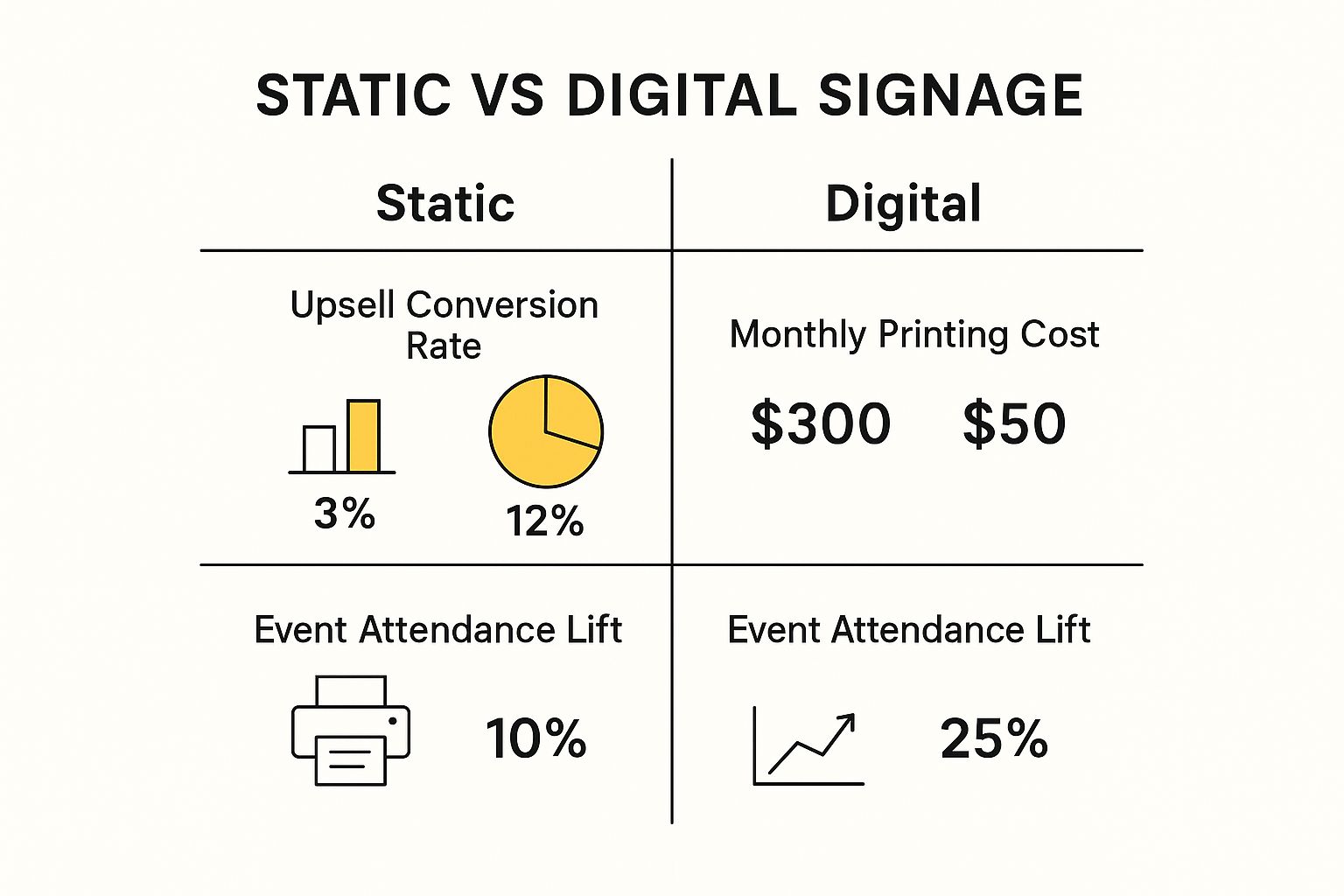
The numbers don't lie. Digital screens not only lead to much higher sales and event turnouts but also chop down your day-to-day operational costs.
Enhancing the Customer Experience
It’s not all about the hard sell. Digital signage is also fantastic for creating a memorable vibe. It helps you entertain, inform, and connect with your guests, which makes them want to stick around longer and come back again. A great experience always leads to great business.
For instance, instead of having customers buried in their phones checking sports scores, you can become the go-to spot by showing live games. This keeps their attention inside your bar, where they’re much more likely to order another round.
Digital signage transforms your bar's four walls into a dynamic canvas. It's your silent host, entertainer, and salesperson, all working in perfect harmony to ensure every guest has an exceptional visit.
Every message and every image reinforces your brand and what makes your place special.
Slashing Costs and Boosting Agility
Finally, let's talk about the practical side of things. The ongoing costs of designing, printing, and handing out paper menus, posters, and flyers can add up fast. Digital signage pretty much gets rid of those expenses.
Imagine a supplier runs out of a popular craft beer. With a digital system, you can pull it from every screen in seconds, avoiding the awkward moment when a customer orders something you don't have.
This kind of flexibility is a huge advantage. You can react to a sudden rainstorm by instantly promoting a "rainy day" whiskey special, or change your entire menu for a themed trivia night with a few clicks. That level of speed is just not possible with static signs, making your digital signs advertising investment a smart financial move that quickly pays for itself.
Choosing Your Digital Signage Toolkit
Getting started with digital signs advertising can feel a bit daunting. All the lingo about players, platforms, and pixels can sound like a foreign language. But trust me, setting up a system for your bar is a lot simpler than it looks. It really comes down to three key pieces that work together to become your new marketing powerhouse.
Think of it like setting up a sound system for live music. You’ve got the speakers (the hardware), the mixing board to control everything (the software), and of course, the actual music (the content). Each part is crucial, and when they work in sync, you create an amazing atmosphere for your guests. Let's break down what you'll need.
The Hardware: Your Screens and Players
First up is the hardware—the stuff you can actually see and touch. This is your screens and the small but mighty devices that run them.
- The Screens (Displays): This is the main event, what everyone will be looking at. You don’t have to break the bank on expensive commercial displays right away. Plenty of bars get fantastic results with standard consumer-grade smart TVs, which are affordable and easy to find. That said, for a high-traffic spot or a wall that gets blasted with sunlight, a commercial screen with extra brightness and durability is a smart long-term investment. Beyond the screen itself, properly managing display brightness is key to making sure your ads pop in any lighting.
- The Media Player: This little box is the brain behind the whole operation. It’s a compact computer that holds all your content—your videos, menus, and promo images—and tells the screen what to show and when. While some smart TVs have built-in apps, a separate, dedicated media player gives you way more power, reliability, and freedom. We've got a whole guide on this, but you can learn more about picking the right device in our post on the best digital sign media player.
Choosing the right hardware is all about balancing your budget with your bar's real-world needs. A dimly lit speakeasy has very different requirements than a sun-drenched patio bar, so really think about the environment where each screen will live.
Here’s a quick look at some common options to help you decide.
Comparing Digital Signage Hardware for Bars
| Screen Type | Best For | Pros | Cons |
|---|---|---|---|
| Consumer Smart TV | Low-traffic indoor areas, budget-conscious setups, testing the waters. | Affordable, widely available, easy to set up. | Lower brightness, not built for 24/7 use, shorter lifespan. |
| Commercial Display | High-traffic areas, bright environments (near windows), outdoor patios. | High brightness, very durable, designed for continuous operation. | More expensive upfront, can be heavier and bulkier. |
| Interactive Touchscreen | Self-service ordering, customer engagement, displaying large menus. | Highly engaging for customers, can streamline ordering. | Highest cost, requires specialized software, needs regular cleaning. |
| Video Wall | Creating a high-impact "wow" factor behind the main bar or on a feature wall. | Unmatched visual impact, completely customizable. | Complex installation, significant investment, requires professional setup. |
Ultimately, the best screen is the one that fits your space and your goals without blowing your budget. Start with what you can manage and scale up as you see the returns.
The Software: Your Content Command Center
If the hardware is the body, the software is the brain. This is your Content Management System (CMS), the platform that lets you control what's showing on all your screens from one central place. A good CMS is what turns managing your digital signage from a major chore into something you can do in minutes.
A modern, cloud-based CMS is a total game-changer for a busy bar. It means you can update specials, add a last-minute promotion, or change the entire schedule from your laptop or phone—whether you're in the back office or on vacation.
This is where you'll upload your videos, design your menus with easy-to-use templates, and create schedules. Want to run lunch specials from 11 AM to 2 PM, switch to happy hour promos from 4 PM to 6 PM, and then play high-energy brand videos late at night? Your CMS handles all of that automatically. The key is to find software that’s intuitive enough for anyone on your team to use.
The Content: Your Visual Story
Finally, we get to the content—the images, videos, and text that will actually grab your customers' attention and get them to open their wallets. You could have the best 4K screen in the world, but it’s useless if you're just showing a blurry, boring graphic.
A solid content strategy should mix things up to keep people from just tuning the screens out.
- Promotional Content: This is what drives your sales. We’re talking about mouth-watering videos of your mixologists crafting cocktails, gorgeous photos of your new appetizer, and bold, can't-miss graphics for your weekly specials.
- Informational Content: Make your screens a genuinely helpful resource for your guests. Display your full drink menu, list your hours, or post the schedule for upcoming events like trivia night or live music.
- Entertainment Content: Keep your customers engaged while they wait for their drinks. You can show live sports scores, pull in a feed of customer photos from social media, or even display fun facts about the local craft beers you have on tap.
The market for these screens is booming, especially outdoors. While indoor signs still make up 78.9% of the US market, outdoor digital signage is growing at a rapid 12.1% annual clip, opening up huge opportunities for sidewalk and patio advertising. Getting these three pieces of your toolkit—hardware, software, and content—right is the foundation for building a system that truly works.
Creating Content That Customers Actually Watch
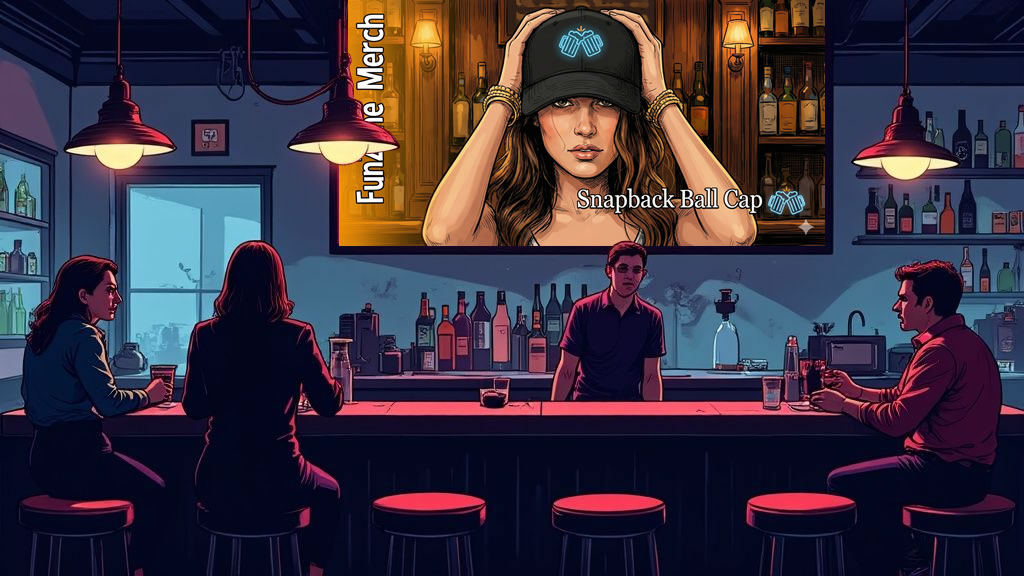
Let's be honest. A fancy screen showing boring content is just an expensive wall decoration. The real power of digital signs advertising isn’t the hardware—it's what you put on it. The right visuals can stop a customer mid-conversation and get them to order another round.
Think about your bar. It's probably dark, a little loud, and definitely crowded. Your on-screen content has to be built to cut through that chaos. This means ditching the static images and embracing dynamic visuals that grab attention from across the room.
The idea is to create a constantly rotating loop of content that never feels stale. When you get this right, your screens become a core part of the bar's vibe, not just more background noise.
Designing for the Bar Environment
Making content for a bar screen is a whole different ballgame than designing a social media post. Your audience is distracted, standing far away, and probably only glancing at your screen for a few seconds. Every single design choice has to be made with that reality in mind.
Focus on two things: instant readability and visual punch. If a customer has to squint to read your happy hour special, you've already lost them.
Here are the non-negotiables for designing content that works in a bar:
- Go for High Contrast: Use bright, bold colors on dark backgrounds. We're talking vibrant yellows, electric blues, or clean whites on a black backdrop. This makes your message pop, even in the dimmest lighting.
- Make Your Fonts Huge: Your text needs to be massive. Use the "across the room" test—if you can't read it from the other end of the bar, the font's too small. Simple, bold, sans-serif fonts are your best bet for clarity.
- Movement is Everything: Motion is the biggest advantage digital has over print. A little bit of movement can make your ad 400% more noticeable than a static poster. Use subtle animations, looping videos of cocktails being poured, or gently scrolling text to catch the eye.
Great design is just the start. Truly effective content creation for small business success is about making something that connects with your audience and drives sales.
Building an Automated Content Schedule
One of the best things about a good digital signage system is the ability to schedule content automatically. This is a game-changer. By using a strategy called day-parting, you can show the perfect message at the perfect time without having to touch a thing.
Just think about the different phases of your day. The lunchtime crowd wants something completely different from your late-night patrons. Your on-screen promotions should change right along with them.
A smart content schedule turns your screen into an intelligent marketing tool that adapts to the flow of your business. It works for you, so you don't have to constantly manage it.
For instance, a simple weekly schedule might look like this:
- Lunch Rush (11 AM - 2 PM): Run mouth-watering videos of your food specials, combo deals, and craft sodas.
- Afternoon Lull (2 PM - 4 PM): Start promoting upcoming events. Plant the seed for trivia night or live music to get people thinking about coming back.
- Happy Hour (4 PM - 7 PM): This is primetime. Hit them with energetic visuals of your drink specials. A countdown timer can add a great sense of urgency.
- Late Night (9 PM - Close): Switch gears to high-margin spirits and signature cocktails. Use vibrant brand videos that match the late-night energy.
This set-it-and-forget-it approach ensures your messaging is always on point, making every ad more effective.
Tapping into User-Generated Content
Your customers are already your biggest fans and best photographers. Putting their social media posts on your screens is a fantastic way to build community and show some powerful social proof.
When someone sees their own photo pop up on your big screen, it creates an instant connection. It tells them you're paying attention and makes them feel like part of the family.
Setting up a live feed of Instagram posts that use your bar's hashtag is simple but incredibly effective. It encourages more people to post, generating free marketing and making everyone feel included. This strategy keeps your content fresh and authentic, turning your happy customers into your most convincing advertisers.
Bringing Your Digital Signage Strategy to Life
You’ve got the hardware, you’ve picked your software, and you’re buzzing with ideas for great content. Now it's time to put it all together and bring your digital signs advertising strategy to life. This is where the rubber meets the road—where all that planning turns into a real, tangible experience for your customers.
The secret to long-term success is creating a simple, repeatable process for managing your screens. It shouldn’t feel like a chore. In fact, it should be so straightforward that any team member can update a special without needing a degree in IT. The goal is to make the tech work for you, not the other way around.
Finding the Sweet Spots for Your Screens
Before you even think about drilling holes, walk through your bar as if you’re a customer seeing it for the first time. Where do you naturally look? You’re searching for high-impact spots that grab attention without feeling intrusive or out of place.
Keep an eye out for these prime locations:
- Behind the Bar: This is your money-maker. It’s where your customers' eyes linger the longest, making it the perfect stage for promoting high-margin cocktails, craft beers, and daily specials.
- Near the Entrance: A screen by the door is your digital host. It can welcome guests, flash your hours, and tease upcoming events or live music, setting the vibe from the moment they step inside.
- In Waiting Areas: Got a spot where people hang out waiting for a table or their takeout order? A screen there can keep them engaged with drink promos or food pairings instead of staring at their phones.
Once you've chosen your locations, focus on a clean installation. Mount the screens securely at eye level and tuck away any cables. A polished, professional setup tells customers you care about the details.
Building Your First Content Calendar
A content calendar is your game plan. It’s what keeps you from scrambling every morning to decide what to put on the screens. Start by mapping out a typical week at your bar. What’s happening on a slow Tuesday versus a packed Friday night?
Your calendar should match the natural rhythm of your business. Think about what your customers want and when they want it. Early evening might be about happy hour deals, while late-night calls for promoting top-shelf spirits. A smart schedule makes sure your message always hits the mark.
Think of your content calendar as your automated marketing manager. It works around the clock to push the right specials at the right time, so you can focus on running your bar.
This kind of planning prevents your screens from just becoming digital wallpaper. It transforms them into a dynamic tool that adapts to the mood and flow of your bar all day, every day.
Getting Your Team On Board
Your staff is the key to making this all work. A quick training session is all it takes to empower them to manage the system with confidence. Show them the essentials: how to upload a new graphic, change the price on a daily special, and handle any simple troubleshooting.
When you're choosing your content management system (CMS), prioritize one with a dead-simple interface. Seriously, if your team can post on Instagram, they can run your digital signage. Modern cloud-based platforms make it easy to push updates from a tablet or phone, even in the middle of a dinner rush.
The explosive growth of this technology is a direct result of how much easier it’s become to use. The global digital signage market has jumped from USD 19.78 billion in 2018 and is projected to hit USD 35.94 billion by 2026. This isn't just because of cheaper hardware; it’s because cloud-based software has made content management incredibly simple. You can read more about these digital signage market trends at Fortune Business Insights. By following these steps, you’re not just installing screens—you’re putting a powerful, user-friendly marketing machine into play.
Proving the Value of Your Investment
So, you’ve put in the screens, the software, and some killer content. Now comes the million-dollar question every owner has to ask: "Is this thing actually making me money?" Measuring the return on your digital signs advertising investment is absolutely critical, but don't worry—you won't need a team of data scientists to figure it out.
Proving the value is really just about connecting the dots. It’s about linking what people see on your screens to what happens at the cash register. The goal is to get straightforward data that not only shows you if the strategy is working but also gives you the insights to make it even better.
Tracking Direct Sales Lift
The cleanest, most powerful way to measure your return is by tracking the sales of specific items you're promoting. It’s simple, really. Think of your digital signs as your own little marketing laboratory. For one week, feature a high-margin craft beer or a new signature cocktail only on the screens. Then, just watch what happens.
Here's a simple way to run this experiment:
- Pick Your Product: Choose a specific drink or special you want to push.
- Run the Campaign: Give it the spotlight on your digital screens with great-looking visuals. The key is to not mention it on chalkboards or have your bartenders verbally push it. Isolate the variable.
- Check Your POS Data: At the end of the week, pull the sales report for that specific item and compare it to a week when it wasn't being advertised on screen.
A sudden jump in sales is the clearest proof you can ask for. If you sell 50% more of that featured whiskey after it's been splashed across your screens all night, you've got hard evidence that your investment is directly driving revenue.
This method gives you undeniable numbers. When you need to justify the spend, nothing speaks louder than a clear and direct lift in sales. To get an even clearer picture of your total return, it helps to understand all the factors that go into digital signage pricing so you can calculate your net profit accurately.
Measuring Customer Engagement
Beyond just moving more product, your screens are there to build a vibe, create a community, and keep people coming back. While this is a little tougher to tie to a specific dollar amount, it's a huge part of your bar’s long-term health. An engaged customer is a loyal customer, period.
You can measure this in a few creative ways:
- Hashtag Campaigns: Create a fun, unique hashtag for your bar (like #JoesBarNights) and display it on your screens. Encourage guests to use it when they post photos on social media. A quick search will show you exactly how many people are interacting with your brand online.
- QR Code Scans: Put a QR code on screen that links to something valuable—your loyalty program sign-up, a special discount, or your upcoming events calendar. Most QR code generators have built-in analytics that show you exactly how many people are scanning them.
- Direct Feedback: This one’s old school, but it works. Just ask your regulars what they think of the new screens. Their honest feedback is gold for tweaking your content and making sure it’s actually hitting the mark.
By tracking both the hard sales data and these softer engagement metrics, you get a full, 360-degree view of how your digital signage is performing. This combination of data empowers you to fine-tune your content, prove the system’s worth, and keep making smart decisions for your business.
Common Questions from Bar Owners
Jumping into digital signage for your bar is a smart move, but it's natural to have a few questions first. Let's face it, you're busy, and you need straight answers before investing your time and money. We’ve pulled together the most common questions we hear to help you get the clarity you need.
How Much Does This Actually Cost?
The price tag can swing quite a bit. You could get started for just a few hundred bucks with a smart TV and some basic software, or you could go all-in with a professional multi-screen setup that costs several thousand.
Your main costs break down into three areas: the screens themselves, a monthly software subscription (which usually runs $20-$50 per screen), and creating the content to display. You can definitely create content in-house to save money, or hire a pro if you want to get fancy.
Can My Team Actually Update the Content Easily?
Yes, absolutely. Modern digital signage software is built for people who aren't tech wizards. If your bartenders can make a post on Instagram, they have all the skills they need to update your screens.
Most systems use simple drag-and-drop interfaces and have a library of templates ready to go. Swapping out the daily special or adding a new event takes just a few minutes from a laptop or even a smartphone.
The real beauty of modern digital signage is its simplicity. The technology is designed to empower your team, not create another complicated task on their to-do list. It’s all about making powerful marketing accessible to everyone.
How Do I Keep the Content from Getting Stale?
This is where the magic happens. The key is to mix things up and put your content on autopilot. Scheduling is your best friend here. You can set your screens to show different promotions based on the time of day—a tactic called "day-parting."
Imagine automatically showing your lunch specials from 11 AM to 2 PM, then seamlessly switching to flashy cocktail videos and happy hour deals as the evening crowd rolls in. It runs itself.
You can also pull in live, dynamic feeds so there’s always something new on screen. Think about adding:
- Live sports scores to keep the fans glued to their seats.
- A live feed of social media posts that use your bar's hashtag.
- Local news or weather tickers to give patrons a reason to glance up.
This strategy keeps your screens fresh and relevant without you having to constantly babysit them. Your digital signs advertising becomes a living, breathing part of your bar's vibe.
This article originally appeared on SharpeTools.com as part of the Bar Marketing 101 series.