
In today's competitive nightlife scene, a good drink menu and a standard happy hour are merely the starting point. Thriving bars create unforgettable experiences that build community, drive conversations, and keep guests coming back for more. But how do you cut through the noise and transform casual visitors into loyal regulars? It requires a blend of creativity, strategy, and a deep understanding of what modern patrons truly crave from their social outings.
This guide moves beyond the obvious, offering 10 innovative and actionable marketing ideas for bars designed to boost your brand, pack your venue, and drive revenue. We will explore specific strategies that focus on engagement and immersion, from themed pop-up events and interactive social media contests to signature drink collaborations and gamified loyalty programs. To truly unlock your bar's full potential and create lasting impressions, understanding the power of experiential marketing can be transformative.
Whether you operate a neighborhood pub, a high-end cocktail lounge, or a bustling sports bar, these strategies provide a practical roadmap to stand out and succeed. Each idea is broken down with clear implementation details and real-world examples to help you turn concepts into profitable action. Let's dive into the tactics that will define your bar's success.
1. Themed Pop-Up Events and Takeovers
One of the most powerful marketing ideas for bars is to completely transform your space into an immersive, limited-time experience. Themed pop-up events and takeovers go beyond a simple happy hour by creating a memorable, shareable atmosphere that generates significant buzz and attracts new customers. This involves redecorating your venue, creating a special themed cocktail menu, and having staff dress the part to fully transport your guests.
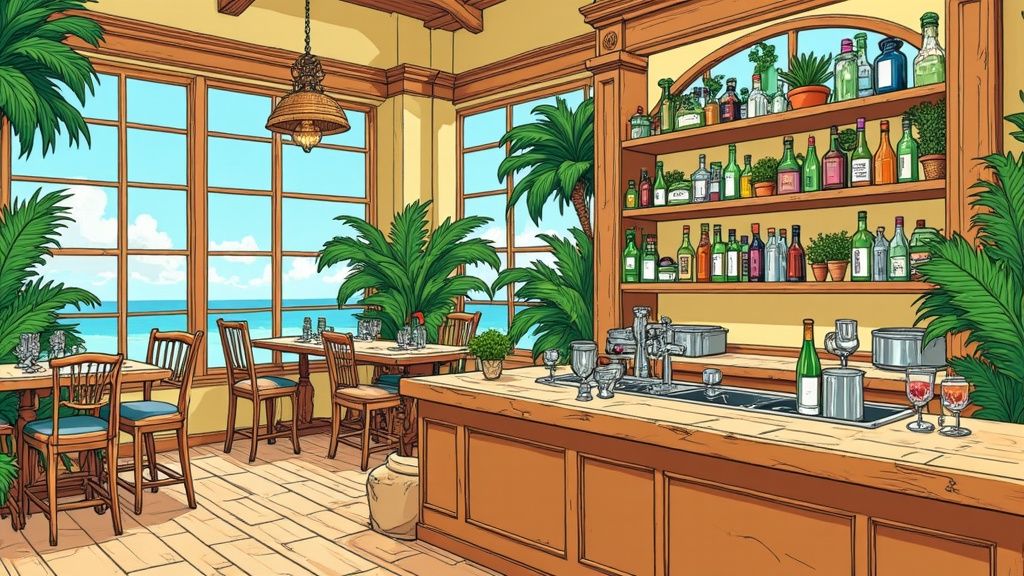
This strategy taps into the "fear of missing out" (FOMO) by offering a unique experience that won't be available forever. Success stories like the Stranger Things-themed "The Upside Down" pop-up in Chicago or the sold-out Back to the Future events in Los Angeles prove the massive demand for these immersive concepts. They create a powerful visual narrative that encourages user-generated content, turning your guests into your most effective marketers.
How to Implement This Idea
- Choose a Visually Rich Theme: Select a concept with strong aesthetic elements that photograph well for social media. Think 80s synthwave, a tropical tiki escape, or a spooky Halloween theme.
- Plan Ahead: Give yourself at least 8-12 weeks for proper planning. This allows time for sourcing decorations, training staff, developing the menu, and executing a promotional campaign.
- Create a Unique Hashtag: Promote a specific hashtag for the event (e.g., #YourBarGoes80s) on all materials and encourage guests to use it when posting photos.
- Consider Ticketing: Offering pre-sold tickets helps control capacity, guarantees revenue upfront, and gauges interest before the event officially launches.
For a more focused event, you can also explore specialized tastings. To attract new clientele and offer unique experiences, consider hosting specialized events like these unforgettable bourbon tasting party ideas that build a dedicated following around a specific spirit.
2. Interactive Social Media Contests and Challenges
One of the most effective marketing ideas for bars involves turning your online audience into active participants. Interactive social media contests and challenges engage customers by inviting them to create and share content related to your brand. This strategy moves beyond passive advertising by fostering a sense of community and rewarding creativity with prizes like bar tabs, exclusive merchandise, or even a spot on your menu.
This approach leverages user-generated content (UGC), which acts as powerful, authentic social proof for your establishment. When a follower submits a photo for your contest, they are personally endorsing your bar to their entire network. Iconic examples include cocktail creation contests like those run by The Dead Rabbit in NYC, where winning drinks are added to the menu. These campaigns create organic reach and build a loyal following far more effectively than traditional paid ads.
How to Implement This Idea
- Keep Entry Simple: Make participation easy. A simple "tag three friends and use our hashtag" is often more effective than a complicated multi-step process.
- Offer Compelling Prizes: The reward should match the effort. Offer multiple tiers of prizes (e.g., grand prize, runner-up) to encourage a higher volume of submissions.
- Promote Submissions: Feature contest entries on your Instagram or Facebook Stories. This acknowledges participants and motivates others to join in the fun.
- Set Clear Guidelines: Clearly state the contest rules, duration, and how winners will be chosen and announced. This prevents confusion and ensures fairness.
By turning your marketing into a two-way conversation, you build a stronger connection with your audience. For a deeper dive, explore these game-changing social media for bars strategies in 2025 to maximize your online impact.
3. Signature Drink Collaborations with Local Influencers
Leveraging the power of local personalities is one of the most effective marketing ideas for bars looking to tap into an engaged, pre-existing audience. This strategy involves partnering with social media influencers, bloggers, or micro-celebrities to co-create a signature cocktail. The drink, often reflecting the influencer's brand or taste, is then featured for a limited time and heavily promoted across their channels, driving their followers directly to your establishment.

This approach provides authentic, third-party validation for your bar. When an influencer shares their custom-named cocktail, it feels less like a traditional advertisement and more like a genuine recommendation. For example, renowned bars like Broken Shaker in Miami have successfully partnered with local food bloggers for cocktail series, while others have teamed up with comedy podcast hosts to create drinks themed around their shows, generating instant buzz and foot traffic.
How to Implement This Idea
- Choose the Right Partner: Prioritize influencers whose audience aligns with your target demographic. Micro-influencers (10k-50k followers) often yield a better return on investment due to higher engagement rates and a more dedicated community.
- Negotiate Clear Deliverables: Before starting, create a formal agreement outlining expectations, such as the number of posts, stories, and in-person appearances. This ensures both parties understand their commitments.
- Involve Them in the Creative Process: Document the cocktail creation session with your bartender and the influencer. This behind-the-scenes content is perfect for social media stories and reels, building anticipation for the launch.
- Host an Exclusive Launch Event: Kick off the collaboration with a private event for the influencer and a select group of their followers. This creates an initial surge of user-generated content and makes the partnership feel like a special occasion.
4. Gamification Through Loyalty Apps and Punch Cards 2.0
Transforming customer retention into an engaging game is one of the most effective marketing ideas for bars today. Modern loyalty programs move beyond simple "buy ten, get one free" punch cards by incorporating gamification: challenges, achievement badges, and tiered status levels that make repeat business feel rewarding and fun. This strategy uses psychology to foster a deeper connection with customers, encouraging them to visit more often and spend more per visit.
This approach makes loyalty tangible and interactive. Instead of just a transaction, each visit becomes an opportunity to progress towards a goal, such as unlocking a "Cocktail Connoisseur" badge by trying every signature drink. Major brands like Buffalo Wild Wings have built massive communities with this model, but independent bars can leverage platforms like Square Loyalty or FiveStars to implement similar sophisticated systems. It creates a powerful incentive loop that keeps your bar top-of-mind.
How to Implement This Idea
- Make Early Rewards Achievable: Set the first milestone low (e.g., a reward after just three visits) to hook new members and demonstrate immediate value.
- Create Tiered, Exclusive Perks: Design status levels like Silver, Gold, and Platinum, with each tier unlocking genuinely valuable rewards like exclusive access to new menu items or priority seating.
- Incorporate Time-Sensitive Challenges: Drive traffic during slower periods by offering bonus points or special rewards for visiting on a Tuesday or completing a challenge within a specific week.
- Personalize Offers with Data: Use the data collected through the app to send personalized promotions, such as a birthday reward or a special offer on a customer’s favorite type of beer.
By turning loyalty into a compelling experience, you build a community of regulars who are emotionally and financially invested in your success. For more inspiration on designing your program, explore these powerful customer loyalty program examples that showcase creative and effective strategies.
5. Experiential Cocktail Classes and Mixology Workshops
Transform slow periods into profitable, engaging events by hosting experiential cocktail classes. This marketing idea for bars turns customers into participants, teaching them to craft your signature drinks in a fun, social setting. Instead of just serving a cocktail, you're selling an experience, creating a deeper connection with your brand and turning your bar into a destination for more than just a night out.
This strategy is highly effective because it generates revenue during typically quiet hours, such as weekday afternoons or early evenings. Pioneered by industry legends like Dale DeGroff and perfected by renowned establishments like Death & Co, these workshops attract a new clientele looking for unique activities, from date nights to corporate team-building events. The interactive format is inherently shareable, encouraging social media posts that provide authentic, word-of-mouth marketing.
To give you a quick reference on the potential of this model, here are some key data points.
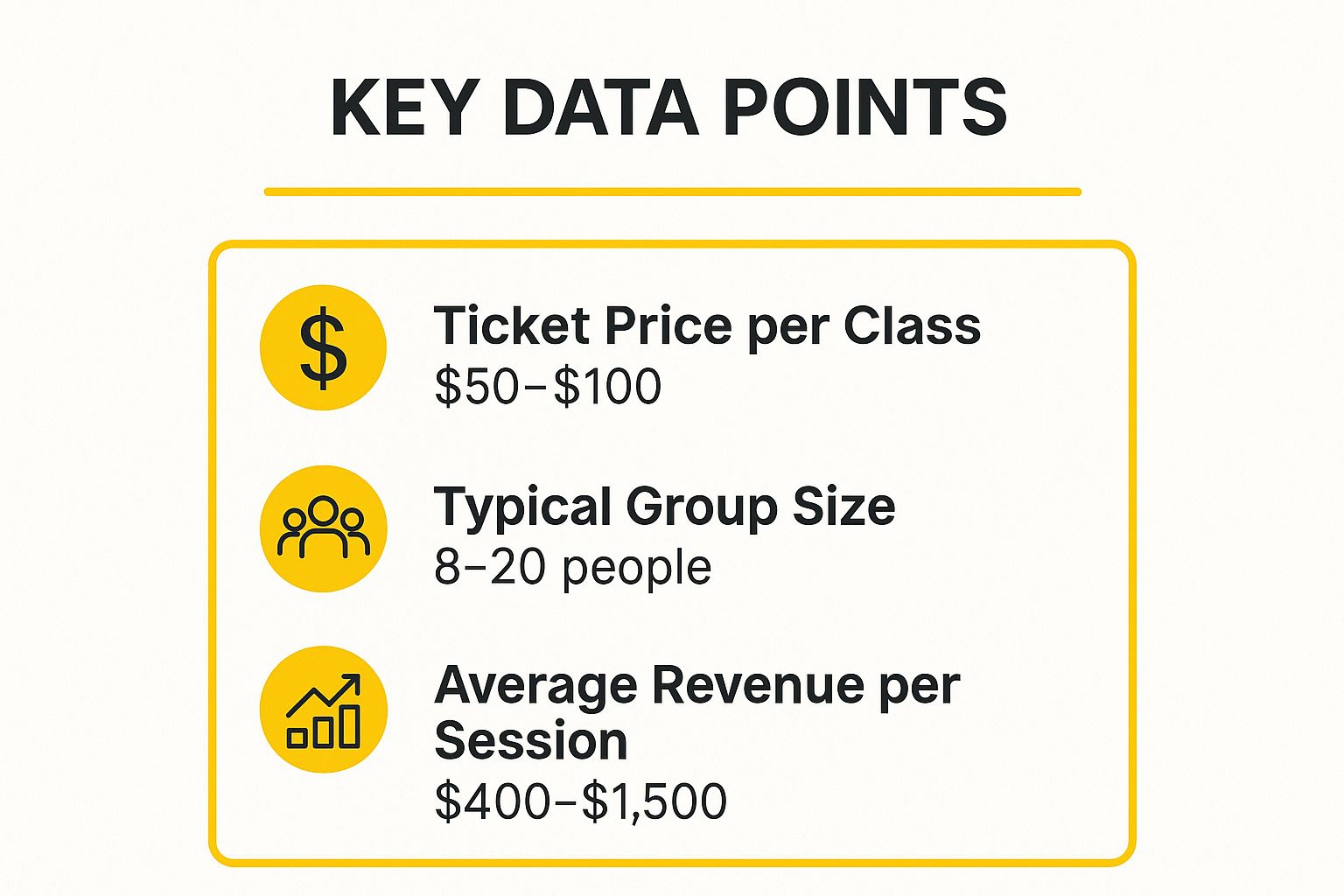
As the data shows, even a small class can generate significant revenue during off-peak hours, making it a highly efficient use of your space and staff.
How to Implement This Idea
- Structure the Class: Plan a 90-minute to two-hour session where guests learn to make 3-4 themed cocktails. Themes like "Tiki Classics," "Prohibition-Era Drinks," or "Winter Warmers" are popular.
- Price Strategically: Set a ticket price between $50 and $100 per person. This should cover liquor costs, light snacks, the instructor's time, and a healthy profit margin.
- Promote on Multiple Platforms: Market your classes on your website and social media, but also leverage platforms like Eventbrite, Cozymeal, or Airbnb Experiences to reach a broader audience actively searching for local activities.
- Require Prepayment: Always require guests to book and pay in advance. This secures revenue and dramatically reduces the financial impact of no-shows.
- Create Upsell Opportunities: Offer a take-home kit with branded bar tools, a small bottle of a key ingredient, or recipe cards. This adds another revenue stream and keeps your brand top-of-mind.
6. Strategic Partnerships with Complementary Local Businesses
One of the most effective and community-focused marketing ideas for bars is to team up with nearby, non-competing businesses. These strategic partnerships allow you to tap into an existing customer base that shares a similar demographic profile, creating a powerful, mutually beneficial referral system. This involves cross-promoting services through special offers, co-hosting events, or sharing customer rewards with local gyms, theaters, boutiques, or salons.
This approach builds authentic local connections and adds genuine value for your customers. For example, a "sweat and sip" special with a nearby fitness studio attracts their members for a post-workout drink, while a "cut and pint" deal with a barbershop can turn a Saturday errand into a social outing. These collaborations are seen as genuine recommendations rather than direct advertising, fostering goodwill and driving foot traffic for both businesses.
How to Implement This Idea
- Identify Aligned Partners: Look for businesses within a few blocks whose clientele matches your target audience. Think theaters for pre-show cocktails, art galleries for opening night receptions, or bookstores for author events.
- Create Trackable Offers: Design a specific, measurable offer to gauge success. For instance, "Show your movie ticket from [Theater Name] for a free appetizer" or use a unique QR code on a partner's flyer.
- Formalize the Agreement: Start with a short-term trial partnership and put the terms in writing. This ensures both parties understand their promotional responsibilities and the offer details, preventing misunderstandings.
- Co-Host Engaging Events: Plan quarterly co-hosted events to cross-pollinate your audiences directly. An art gallery opening or a boutique's seasonal launch party held at your bar can introduce dozens of new potential regulars to your space.
Efficiently managing these partnerships and events is key, which often starts with optimizing your team's workflow. You can get more insights on improving staff productivity to ensure your team can handle new initiatives smoothly.
7. User-Generated Content Campaigns with Branded Hashtags
One of the most cost-effective marketing ideas for bars is to empower your customers to become your brand ambassadors. User-generated content (UGC) campaigns encourage patrons to create and share photos and videos from your venue on their own social media accounts. By creating a unique, branded hashtag, you can easily collect, share, and amplify this authentic content, building a powerful library of social proof.
This strategy transforms happy customers into an organic marketing force. When someone posts about your bar using your hashtag, they are endorsing you to their entire network of friends and followers. This peer-to-peer recommendation is far more trustworthy and influential than traditional advertising. Successful examples range from the global phenomenon of #WhiteClawWednesday, adopted by thousands of bars, to the specific, location-based success of tags like #TheBlondNYC, which has cultivated over 15,000 unique customer posts.
How to Implement This Idea
- Create a Unique & Memorable Hashtag: Keep it short, easy to spell, and directly related to your bar's name (e.g., #SipsAtSullivans or #CocktailsAtCopperBar). Avoid generic terms that will get lost in the noise.
- Promote It Everywhere: Display your hashtag prominently on menus, coasters, receipts, neon signs, and posters throughout your venue. Train staff to mention it when they see guests taking photos.
- Designate "Instagrammable" Spots: Create a visually appealing backdrop, a unique piece of art, or a well-lit corner specifically for photos. Dramatic cocktails and unique glassware also encourage sharing.
- Engage and Reward: Actively monitor your hashtag. Like and comment on every post that uses it. Feature the best customer photos on your official social media channels weekly (always giving credit), and consider a monthly prize for the "best post," such as a complimentary drink or appetizer.
8. Live Entertainment and Rotating Event Calendar
One of the most effective marketing ideas for bars is to transform your venue from just a place to drink into a go-to entertainment destination. By creating a strategic weekly schedule of diverse events, you can consistently draw in crowds and appeal to different demographics on different nights. This involves programming a mix of live music, trivia, comedy shows, DJ nights, or sports viewing parties, each marketed to its specific audience to build a loyal following.
This strategy turns slow weekdays into profitable nights and builds a reputation for being a community hub. The success of concepts like Pete's Dueling Piano Bar, which built its entire brand around a single entertainment format, shows the power of this model. Similarly, local bars hosting viewing parties for shows like RuPaul's Drag Race have seen attendance skyrocket on otherwise quiet evenings, proving that niche events can deliver huge returns by catering to passionate fanbases.
How to Implement This Idea
- Assign Nights to Demographics: Create a predictable schedule that caters to different groups. For example, "Trivia Tuesdays" for millennials, "Live Jazz Thursdays" for an older, more relaxed crowd, and "DJ Saturdays" for a high-energy weekend audience.
- Start with Low-Cost Options: Test the waters with low-investment entertainment like local acoustic acts, open mic nights, or using a turnkey trivia service before committing to more expensive performers.
- Leverage Social Media Events: Create a unique Facebook or Eventbrite event for every single occurrence. This allows you to track RSVPs, send reminders, and run targeted ads to promote each specific night.
- Create Themed Specials: Boost sales by creating signature food and drink specials that tie into the theme of the event, such as a "Puzzle Pint" for trivia night or a "Mic Drop" cocktail for karaoke.
9. Limited-Edition Seasonal Menu Launches with PR Push
Creating a sense of urgency is a powerful marketing tool for bars, and a limited-edition seasonal menu is one of the most effective ways to achieve it. This strategy involves developing a special cocktail and food menu available for a finite period, typically 6-12 weeks, and launching it like a major event. By pairing a creative, timely menu with a coordinated public relations push, you generate excitement and treat each launch as a newsworthy occasion.
This approach capitalizes on the changing seasons and customer desire for novelty, turning a simple menu update into an anticipated event. Think of the cultural phenomenon of Starbucks' Pumpkin Spice Latte or the press coverage that innovative bars like Death & Co receive for their quarterly menu changes. These launches create a reason for regulars to return and for new customers to visit before the unique offerings disappear, driving both traffic and media attention.
How to Implement This Idea
- Plan and Prepare Early: Begin developing your seasonal menu at least eight weeks before launch. This allows ample time for recipe testing, sourcing ingredients, professional photography, and preparing promotional materials.
- Invest in Professional Photography: High-quality visuals are non-negotiable. Hire a professional photographer to capture your new menu items in a way that makes them irresistible for social media, press releases, and your website.
- Execute a Coordinated PR Push: Send a formal press release to local food bloggers, lifestyle publications, and news outlets. Host an invite-only preview event for media and influencers the week before the public launch to generate early buzz.
- Create a Narrative: Don’t just list ingredients. Tell the story behind each drink and dish, highlighting the inspiration, a special local ingredient, or a unique technique to make the menu more compelling.
10. Community Giving and Charity Partnership Programs
One of the most impactful marketing ideas for bars is to align your brand with local causes. Charity partnerships go beyond simple promotion by embedding your establishment into the fabric of the community. This involves creating programs like "dollar-per-drink" donations on specific nights, hosting fundraisers, or crafting a signature cocktail where a portion of the proceeds benefits a chosen organization. This strategy builds immense goodwill and attracts a socially-conscious clientele who prefer to support businesses that give back.
This approach generates powerful, positive PR and fosters a loyal customer base that is emotionally connected to your brand. Success stories like local "Pints for Paws" nights benefiting animal shelters or drag queen bingo events raising funds for LGBTQ+ charities demonstrate the model's effectiveness. These initiatives create a compelling narrative around your bar, showing that you care about more than just profits, which resonates deeply with modern consumers and can significantly differentiate you from competitors.
How to Implement This Idea
- Choose Authentic Partners: Select a local charity or cause that genuinely aligns with your brand’s values and resonates with your target customers. The connection should feel natural, not forced.
- Be Transparent: Clearly communicate how much will be donated from each purchase (e.g., "$1 from every 'Community Cosmo' sold this month goes to..."). Provide public updates on the total amount raised to build trust.
- Involve the Charity: Collaborate with the organization on promotion. They can share the event with their network of supporters, bringing a new audience directly to your door.
- Create Ongoing Programs: While one-off events are great, establishing a quarterly or ongoing partnership creates sustained impact and keeps the community engaged with your bar's philanthropic efforts over the long term.
Marketing Ideas for Bars: Comparison of Top 10 Strategies
| Initiative | Implementation Complexity | Resource Requirements ⚡ | Expected Outcomes | Ideal Use Cases | Key Advantages ⭐ |
|---|---|---|---|---|---|
| Themed Pop-Up Events and Takeovers | High – extensive planning, setup | High – decorations, staff costumes | High – strong social buzz, premium pricing | Special event nights, brand refresh, build hype | Memorable experiences, social media buzz, exclusivity |
| Interactive Social Media Contests and Challenges | Medium – ongoing monitoring | Low – prizes, social engagement | Medium – organic reach, brand community | Customer engagement, viral marketing | Low cost, user-generated content, brand awareness |
| Signature Drink Collaborations with Local Influencers | Medium – negotiation, coordination | Medium – influencer fees, drink creation | Medium – targeted reach, authentic promotion | Influencer marketing, limited-time product launch | Direct influencer access, quality content, local PR |
| Gamification Through Loyalty Apps and Punch Cards 2.0 | High – app setup, staff training | Medium/High – platform costs, management | High – increased retention, data insights | Customer retention, frequent visitors, tiered rewards | Data-driven marketing, higher spend, engagement |
| Experiential Cocktail Classes and Mixology Workshops | Medium – event planning, staffing | Medium – ingredients, bartender time | Medium – revenue during slow periods, loyalty | Slow business hours, team building, social experiences | Revenue boost, loyalty, educational branding |
| Strategic Partnerships with Complementary Local Businesses | Medium – partner negotiations | Low – shared marketing, event costs | Medium – expanded customer base, goodwill | Cross-promotion, local community building | Cost-effective customer access, shared marketing |
| User-Generated Content Campaigns with Branded Hashtags | Low – hashtag creation, monitoring | Low – signage, minor prizes | Medium – ongoing authentic content flow | Social media growth, community building | Free marketing content, social proof, low cost |
| Live Entertainment and Rotating Event Calendar | High – booking, coordination | High – talent fees, equipment | High – increased traffic, diverse audiences | Weeknight activation, diverse demographic targeting | Revenue on slow nights, community building |
| Limited-Edition Seasonal Menu Launches with PR Push | Medium – planning, content creation | Medium – photography, PR, staff training | Medium – repeat visits, premium pricing | Seasonal launches, marketing refreshes | Regular PR, customer excitement, innovation showcase |
| Community Giving and Charity Partnership Programs | Medium – program setup, coordination | Low/Medium – donation costs, event hosting | Medium – positive brand reputation, increased traffic | Social impact branding, community engagement | Goodwill, positive PR, attracts conscious customers |
Start Shaking Up Your Marketing Strategy Today
The journey through these marketing ideas for bars reveals a powerful truth: the most successful establishments are no longer just places to get a drink. They are community hubs, entertainment venues, and lifestyle brands. From the high-energy buzz of a themed pop-up event to the consistent engagement of a gamified loyalty app, each strategy we've explored is a building block for creating a memorable and magnetic brand identity. The goal is to move beyond transactional service and build genuine relationships with your patrons.
Distilling Your Strategy: Key Takeaways
The diverse list of marketing tactics, spanning everything from influencer collaborations to experiential mixology classes, all point toward a central theme: engagement is your most valuable currency. Simply opening your doors is not enough. You must actively create reasons for customers to choose your bar, talk about it online, and return with their friends.
A few core principles stand out:
* Embrace Your Niche: Don't try to be everything to everyone. Whether you're a high-end cocktail lounge or a laid-back neighborhood pub, lean into your unique identity. The most effective promotions will feel authentic to your brand.
* Blend the Digital and Physical: A successful user-generated content campaign or an interactive social media contest can drive real foot traffic. Likewise, an amazing in-person event like a cocktail workshop provides fantastic content to share online. The two should work in tandem, creating a self-sustaining marketing loop.
* Consistency is Crucial: A one-off event is good, but a well-managed, rotating event calendar is great. Sporadic social media posts are easily missed, but a consistent content strategy builds an audience. Choose a few key initiatives and execute them with dedication.
Your Actionable Next Steps
Feeling inspired but not sure where to begin? Don't let analysis paralysis stall your momentum. The best approach is to start small, measure your results, and build from there. Pick one or two ideas from this list that genuinely excite you and align with your bar's personality and resources.
Consider these initial steps:
1. Choose Your Focus: Select one high-impact idea, like launching a limited-edition seasonal menu, and one community-building idea, such as partnering with a neighboring restaurant for a cross-promotion.
2. Create a Simple Plan: Outline the key steps, assign responsibilities if you have a team, and set a realistic timeline and budget. What does success look like for this specific initiative?
3. Execute and Promote: Launch your campaign with enthusiasm. Use your social media channels, email list, and in-house signage to spread the word.
4. Analyze and Adapt: Track your performance. Did you see an increase in sales, social media engagement, or new customers? Use these insights to refine your next marketing push.
Ultimately, mastering these marketing ideas for bars is about more than just filling seats. It’s about building a resilient, profitable business that becomes an indispensable part of your local community. By investing in creative, strategic marketing, you're not just selling drinks; you're crafting experiences and creating a destination that people will love for years to come.
This article originally appeared on SharpeTools.com as part of the Bar Marketing 101 series.