 So why does bar merch often sit there… unsold?
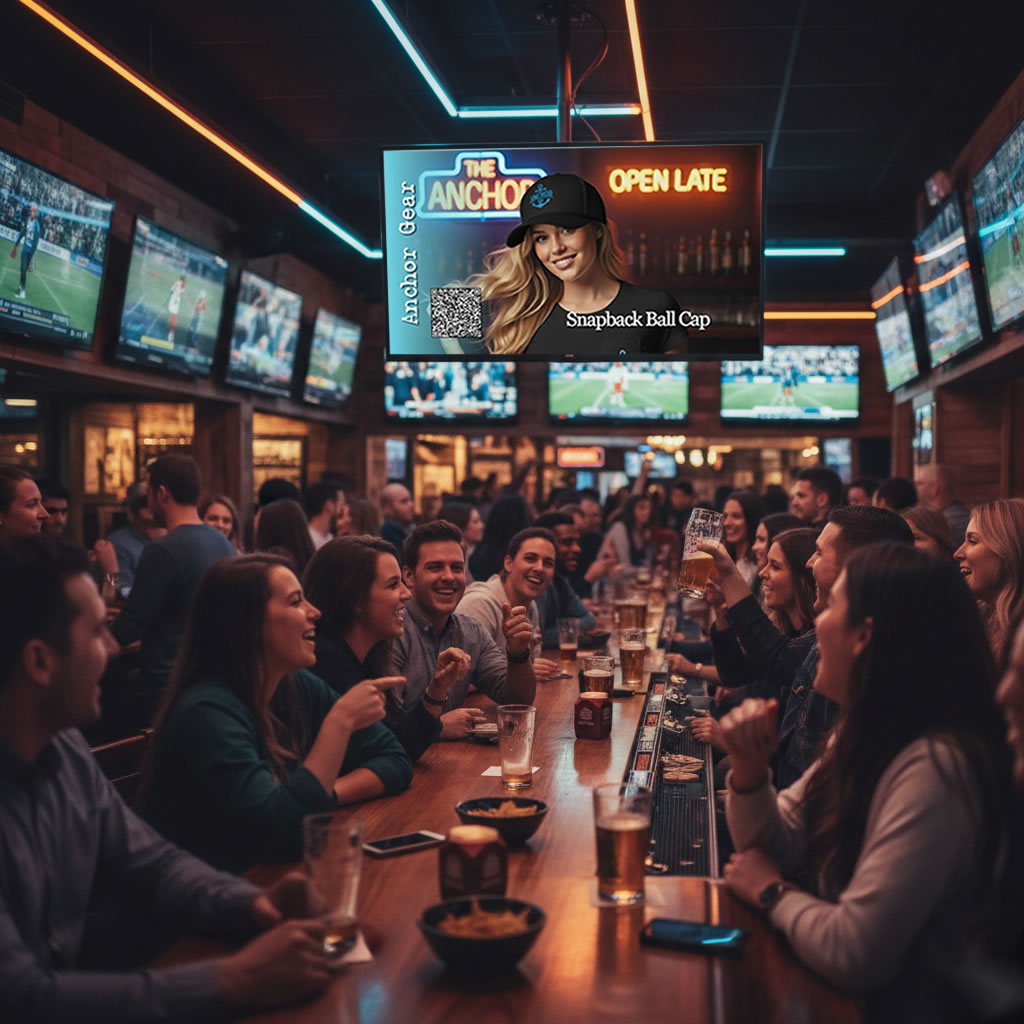
Because most merch doesn’t fail on design. It fails on visibility, timing, and friction. The fix is simple: use your digital display to keep merch visible all night, and use a QR code to make buying it effortless.
Why Bar Merch Usually Fails (Even If It’s Good)
Most bar merch lives in the wrong place and relies on the wrong moment.
- It’s folded behind the bar or stacked on a shelf where nobody sees it.
- It only gets mentioned if a guest asks (rare) or if staff remembers (rarer).
- It competes with everything else happening: drinks, music, sports, friends.
When merch is “out of sight,” it’s also out of mind. The goal isn’t to turn your bar into a store—it’s to make merch visible in a way that feels natural and low-pressure.
Why Digital Displays Work: The Psychology of In-Bar Buying
Bars aren’t just places people purchase things. They’re places people identify with.
When someone buys your shirt, they’re not buying fabric. They’re buying:
- Belonging (“This is my bar.”)
- Status (“I’m a regular.”)
- A souvenir (“That night was a vibe.”)
- A social signal (“Come with me next time.”)
Digital displays amplify this because they create repeated, passive exposure. People see the merch slide, then see it again later, then notice someone wearing it, then see it again. Familiarity builds comfort—and comfort builds purchases.
Why Digital Displays Beat Bartender Upsells
Bartender upsells are inconsistent by nature. Not because bartenders aren’t great—because they’re busy doing their actual job.
A screen never forgets, never feels awkward, and never “waits for the right moment.” It simply keeps the merch in view all night.
Digital displays:
- Sell passively (no pressure, no interruption).
- Sell consistently (every night, every shift).
- Sell to everyone (one-to-many, not one-to-one).
- Pre-sell the idea so staff only needs to fulfill.
The Simple Merch Funnel That Works in Bars
If you want screens + QR to actually move merchandise, keep the funnel ridiculously simple:
- Visual hook (a slide people want to look at)
- One clear message (what it is + why it matters)
- QR code (fast purchase path)
- Quick fulfillment (get it now, not later)
Step 1: The Visual Hook (What to Show on the Screen)
Merch sells best when it looks like it already belongs in the bar. Skip the studio product photo vibe. Use visuals that feel real.
Best-performing visuals:
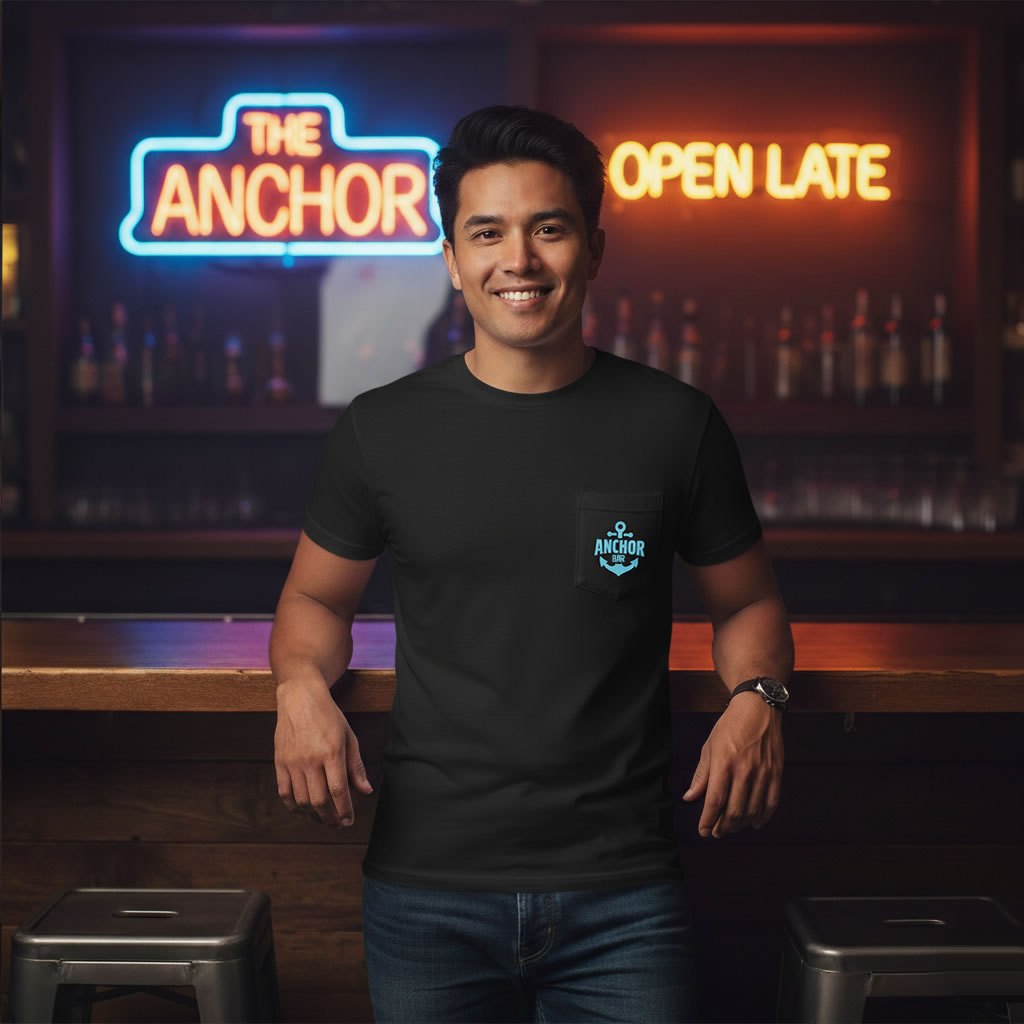
- Bartenders wearing the shirt behind the bar
- Regulars in the merch (candid, not staged)
- A fun “night out” photo where the shirt is visible
- A simple product shot that still feels on-brand (gritty dive bar, sports bar, cocktail lounge, etc.)
Think: “This is what people like me wear here.”
Step 2: One Clear Message (On-Screen Copy That Converts)
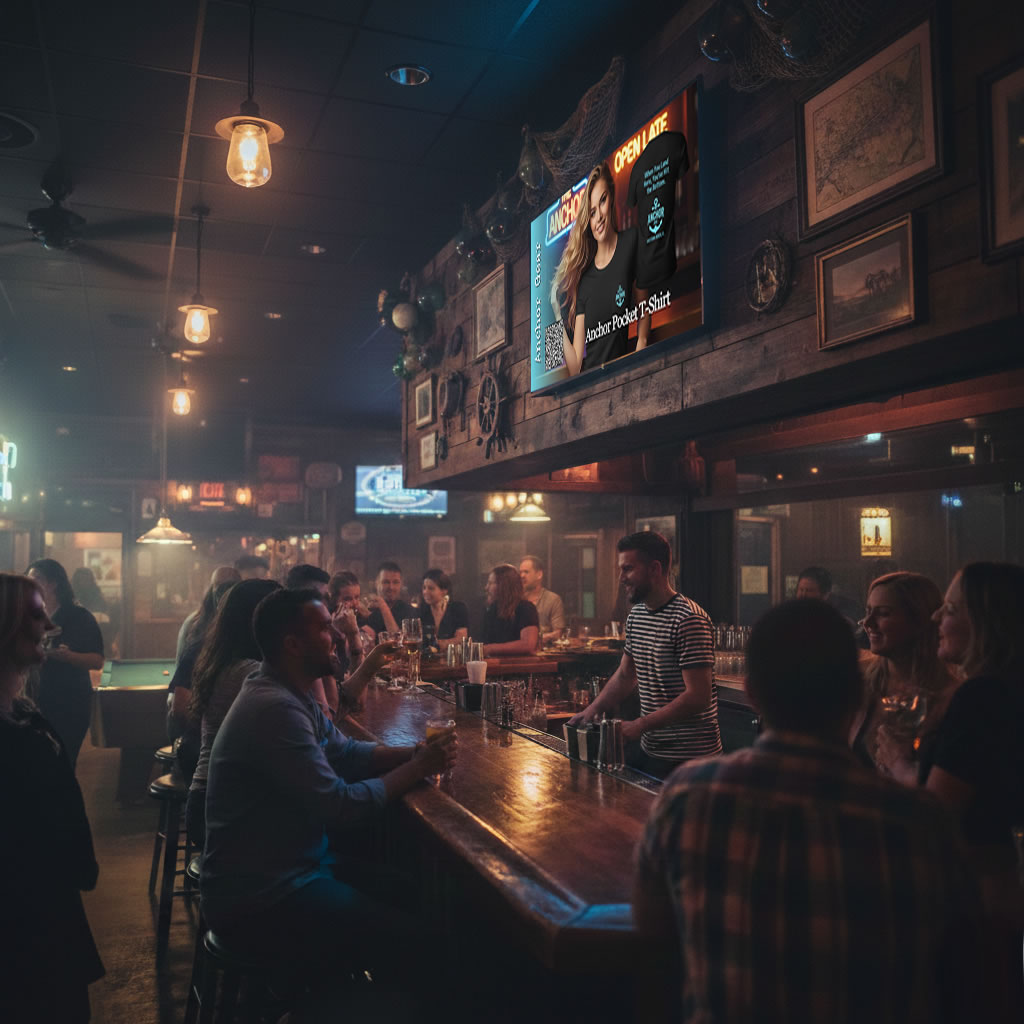
Don’t write paragraphs on a TV. Guests are 15–30 feet away, glancing up between conversations. Your slide needs one message and one action.
Examples that work:
- “This shirt exists. Yes, you want it.”
- “Scan to buy. Pick up at the bar.”
- “Locals wear this.”
- “Limited run. When it’s gone, it’s gone.”
- “Ask the bartender or scan the code.”
Keep it bold, short, and readable from across the room.
Step 3: The QR Code (Where Most Bars Accidentally Lose the Sale)
QR codes don’t fail because people won’t scan. They fail because the destination is slow, messy, or annoying.
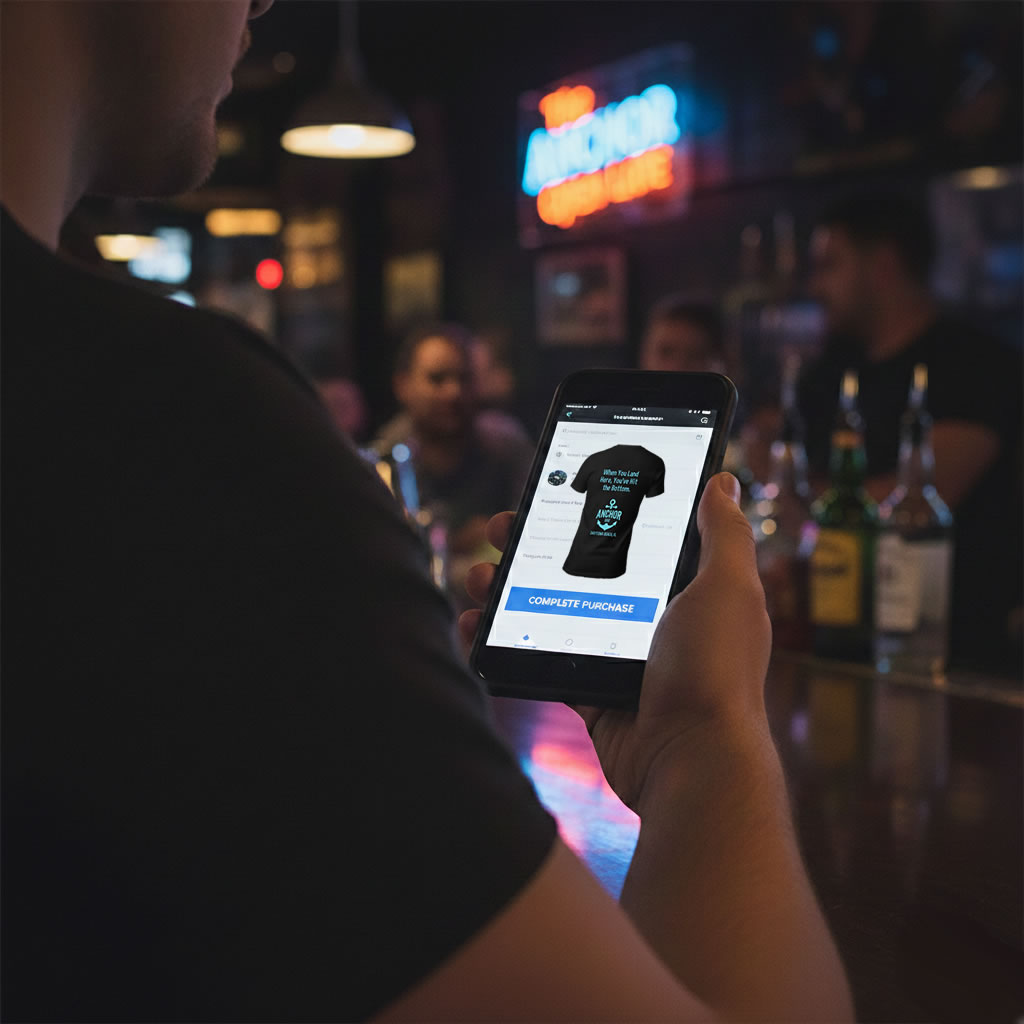
Your QR code should go to a mobile page that:
- Loads instantly
- Shows the merch clearly (no hunting around)
- Makes size selection easy
- Has a frictionless checkout (Apple Pay / Google Pay / Shop Pay if possible)
- Does NOT require account creation
- Offer "Pickup" in bar (no shipping) or ship to my home.
If buying takes more than about 30 seconds, you’ll lose the impulse purchase. Remember: they’re socializing, not shopping.
Step 4: Fulfillment (How Guests Get the Merch Without Killing the Vibe)
How you deliver the merch matters. The goal is instant gratification. Keep it simple.
In-bar fulfillment options:
- Immediate pickup: “Show your receipt—grab it at the bar.”
- Quick claim: “Order now, pick up before last call.”
- Staff-assisted: “Scan it, and we’ll ring it up with your tab.”
The best system is the one your staff can do on the busiest night without thinking.
What to Sell (And What Not To)
You don’t need a giant merch catalog. You need one or two winners.
High-conversion bar merch:
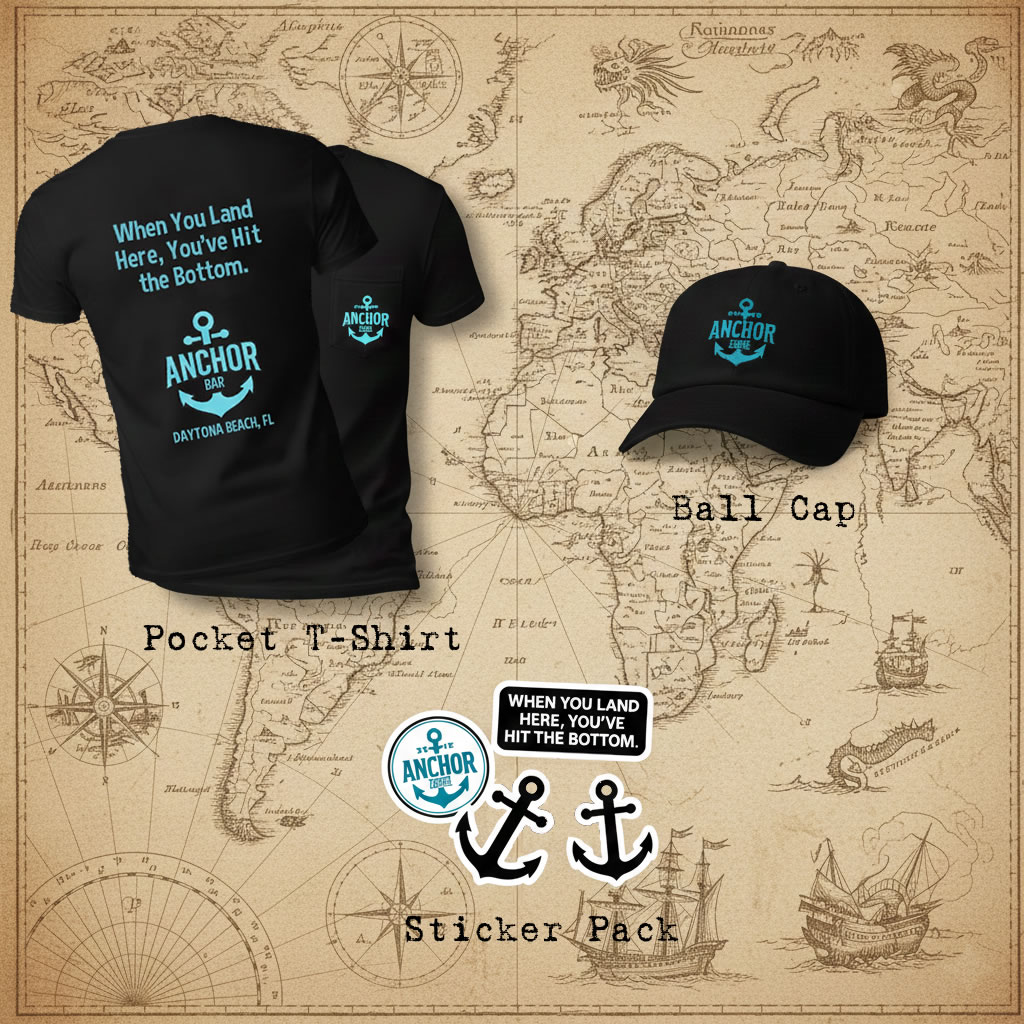
- One iconic t-shirt (your best line, your best identity)
- Hats (low sizing friction)
- Stickers (easy impulse add-on)
- Limited runs (creates urgency and collectability)
Low-conversion mistakes:
- Too many designs (choice paralysis)
- Logo-only merch with no attitude
- Too many sizes/colors/variations early on
- Merch that looks like corporate swag
A strong identity shirt will outsell ten “pretty good” designs.
Pricing Strategy That Works in Real Bars
Price merch like it’s part of a night out—not like an online discount store.
Common pricing ranges that work:
- T-shirts: $25–$35
- Hats: $25–$30
- Stickers: $5–$7
Simple tactics that boost conversion:
- Bundle: “Buy a shirt, get $2 off your next drink.”
- Social proof: “Best seller” / “Regulars’ favorite”
- Urgency: “Limited run” / “Ends Sunday”
- Moment-based framing: “Wear it tonight.”
How Often to Run Merch Slides (So People Don’t Tune It Out)
If you run merch every minute, it feels like advertising. If you run it once a night, nobody sees it. The sweet spot is consistent rotation without being overbearing.
A good rule of thumb:
- Show a merch slide every 6–10 minutes
- Rotate between different merch visuals (bartender wearing it, product shot, customer wearing it)
- Keep the message consistent so people recognize it instantly
Merch should feel like part of your bar’s culture—not a commercial break.
Real-World Merch Examples by Bar Type
The merch slide should match the personality of the room.
- Dive bar: gritty black-and-white photos, sarcasm, “locals only” energy
- Sports bar: game-day merch, playoff runs, team colors, “wear it for the game”
- Cocktail lounge: minimalist design, premium feel, higher price point
Merch doesn’t have to be “nice.” It has to be right.
Why In-Bar Merch Outsells Online Merch
Online merch requires intent. People have to remember you, go home, find the site, and care enough to buy later.
In-bar merch captures the moment while the emotion is hot:
- They’re already having a good time
- They’re already proud to be there
- They want something that represents the night
That’s why screens + QR codes are so powerful: they convert impulse into action instantly.
The Hidden Bonus: The Merch Flywheel
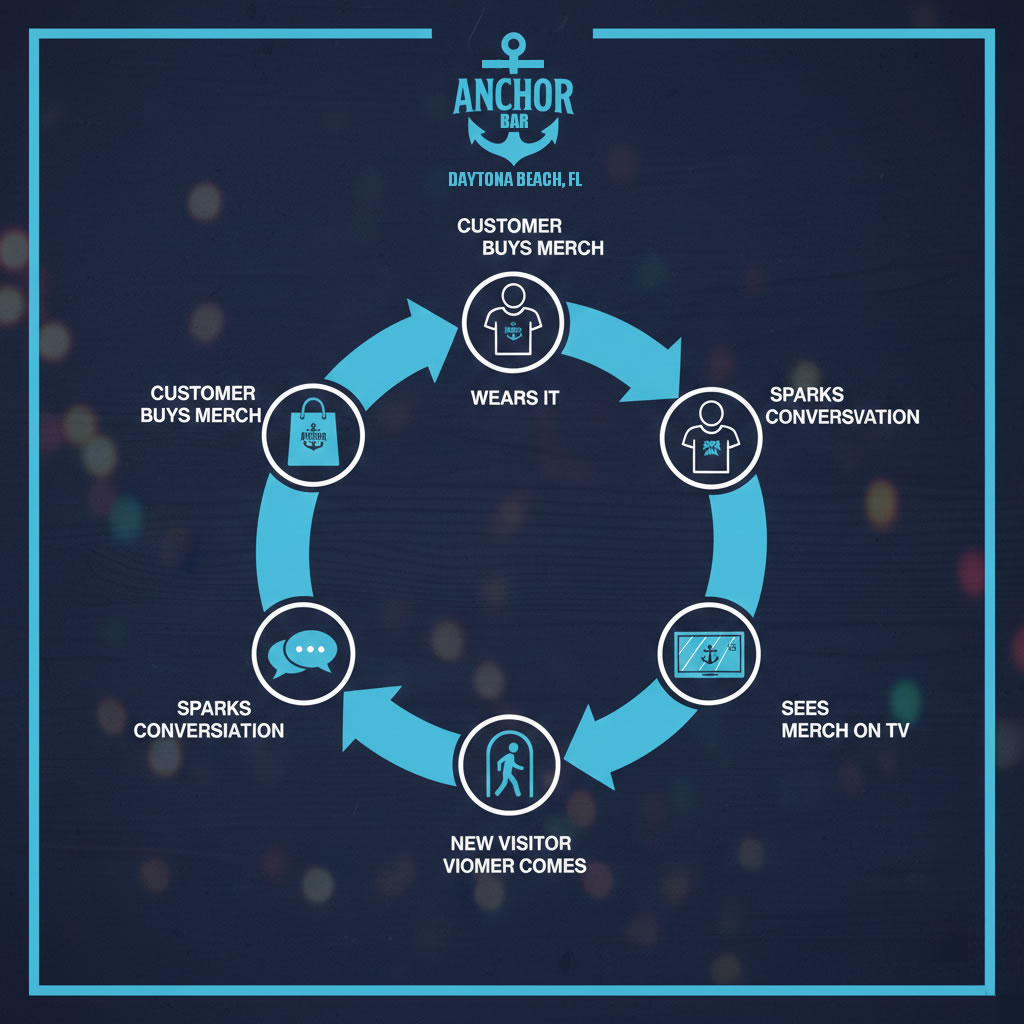
This is the part most bar owners underestimate: merch isn’t just revenue—it’s marketing that customers pay for.
Here’s the flywheel:
- A customer buys a shirt in the bar
- They wear it out in public
- Someone asks about it
- New customer visits
- They see the merch on the screen
- They buy merch too
Now your customers become walking billboards, and your screen becomes the silent salesperson that keeps the loop spinning.
Conclusion: Turn Your TVs Into Revenue, Not Wallpaper
Your bar already has the screens. You already have the audience. And you already have the identity people want to belong to.
Add two things:
- A merch slide that feels like your bar
- A QR code that makes buying effortless
That’s it. No awkward sales pitch. No staff dependency. Just a simple system that sells while the bar does what it does best: create the kind of nights people want to remember.
Quick Implementation Checklist
- Create 3 merch slides (bartender wearing it, regular wearing it, clean product shot)
- Write one short line of copy per slide
- Generate a QR code that links directly to the product page
- Make checkout fast (mobile-first, no account required)
- Rotate merch slides every 6–10 minutes
- Set a simple pickup method your staff can handle on busy nights
At the end of the day, selling more merch in your bar isn’t about pushing products—it’s about keeping attention where it already belongs. When your screens show real customer selfies alongside your drinks, merch, food, and upcoming events, people keep looking up. That attention creates familiarity, familiarity creates curiosity, and curiosity turns into sales without anyone ever having to pitch. BarSelfie was built around that exact idea: mix your guests into the content loop so your TVs feel alive, local, and worth watching—while quietly doing the work of selling for you.
—Stephen@SHARPeTools.com
This article originally appeared on SharpeTools.com as part of the Bar Marketing 101 series.