 In today's competitive landscape, exceptional food and service are the price of entry, not the keys to success. The real challenge for bar and restaurant owners is cutting through the noise to attract new guests and turn them into loyal regulars. This requires a smart, modern marketing strategy that goes beyond placing an ad in the local paper or simply hoping for good word-of-mouth.
The good news? You don't need a massive budget to make a significant impact. This guide provides a comprehensive list of powerful and practical marketing ideas for bars and restaurants, each designed to be implemented today with minimal resources. We're moving past generic advice to give you actionable tactics that drive real-world results.
From leveraging the visual power of an "Instagram-worthy" experience to building an unshakeable local presence with a fully optimized Google Business Profile, these strategies provide a clear recipe for sustainable growth. You will learn how to fill tables on slow nights, increase average guest spend, and build a brand that resonates deeply with your community. Let's dive into the proven tactics that will help you connect with more customers and build a more profitable business.
1. Instagram-Worthy Experiences & User-Generated Content Campaigns
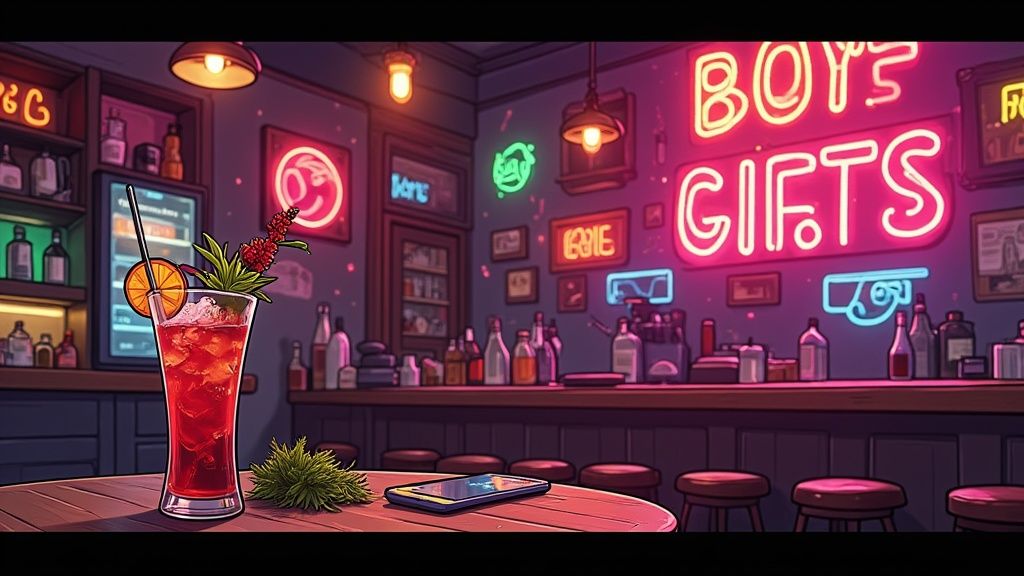
One of the most powerful marketing ideas for bars and restaurants involves turning your customers into your best advertisers. This strategy focuses on creating experiences so visually compelling that guests feel an urge to capture and share them online. By designing specific "Instagrammable moments," you generate a steady stream of user-generated content (UGC), which acts as authentic, word-of-mouth advertising across social networks.
This goes beyond just good food. It's about crafting an environment and presentation that begs to be photographed. Think of Black Tap's viral 'CrazyShake' milkshakes or the iconic pink gallery room at Sketch London. These aren't just menu items or decor; they are deliberate marketing assets designed for social sharing.
How to Implement This Strategy
To get started, identify two or three key elements in your venue that can be transformed into photo opportunities. A stunning cocktail presentation, a unique neon sign with a witty phrase, or a beautifully designed feature wall can all serve this purpose. Ensure these spots have excellent lighting to make photos pop.
Next, create a unique, easy-to-remember hashtag and display it prominently. Encourage guests to use it by offering a small incentive, like a discount on their next visit or a chance to be featured on your official account. Remember, while the visuals draw people in, the quality of your food and service is what makes them stay and leave positive reviews. For truly professional shots that set the standard, consider investing in high-quality commercial food photography to showcase your most photogenic dishes online.
- Train staff to recognize when guests are taking photos and offer to help.
- Engage with UGC by liking, commenting on, and re-sharing customer posts.
- Refresh your elements seasonally to give repeat customers new reasons to share.
By integrating these social media-friendly elements, you build a self-sustaining marketing engine fueled by your own happy customers. To explore this concept further, check out these game-changing social media strategies for bars.
2. Email Marketing with Segmented Lists & Personalization
In an age of fleeting social media trends, email marketing remains one of the most effective and direct marketing ideas for bars and restaurants. This strategy involves building a database of customer emails and segmenting it based on behavior, preferences, and visit history. Instead of sending generic blasts, you can deliver highly personalized offers, event invitations, and birthday rewards that resonate with specific customer groups, driving repeat business and fostering genuine loyalty.
This is a far more sophisticated approach than a simple newsletter. Think of how Sweetgreen sends personalized menu suggestions based on past orders or how The Cheesecake Factory’s birthday emails generate high redemption rates. These campaigns work because they feel less like advertising and more like a personal communication from a favorite establishment. They leverage data to make each customer feel recognized and valued.
How to Implement This Strategy
Start by collecting emails at every customer touchpoint: online reservations, Wi-Fi logins, and at the point of sale. Offer a simple incentive for signing up, like a free appetizer or 10% off, to encourage participation. Once you have a list, use your email platform to create segments, such as "new customers," "high-spenders," "weekend regulars," or "lapsed visitors" who haven't been in for over 90 days.
With your lists segmented, you can automate targeted campaigns. Send a welcome series to new subscribers, a "we miss you" offer to lapsed guests, or exclusive menu previews to your most loyal patrons. The key is to deliver relevant content with a clear call-to-action, such as "Book Your Table" or "View the New Menu." For restaurants looking to streamline this process, platforms like BentoBox offer industry-specific tools designed to integrate with your operations.
- Personalize subject lines with the recipient's name to increase open rates.
- Optimize for mobile, as over 60% of emails are opened on a mobile device.
- Test sending times to see what works best for your audience (e.g., mid-afternoon for dinner promotions).
By leveraging segmented email marketing, you create a powerful communication channel that directly impacts your bottom line. To deepen your understanding of customer engagement, explore these strategies for building restaurant customer loyalty.
3. Strategic Partnership with Local Businesses & Cross-Promotion
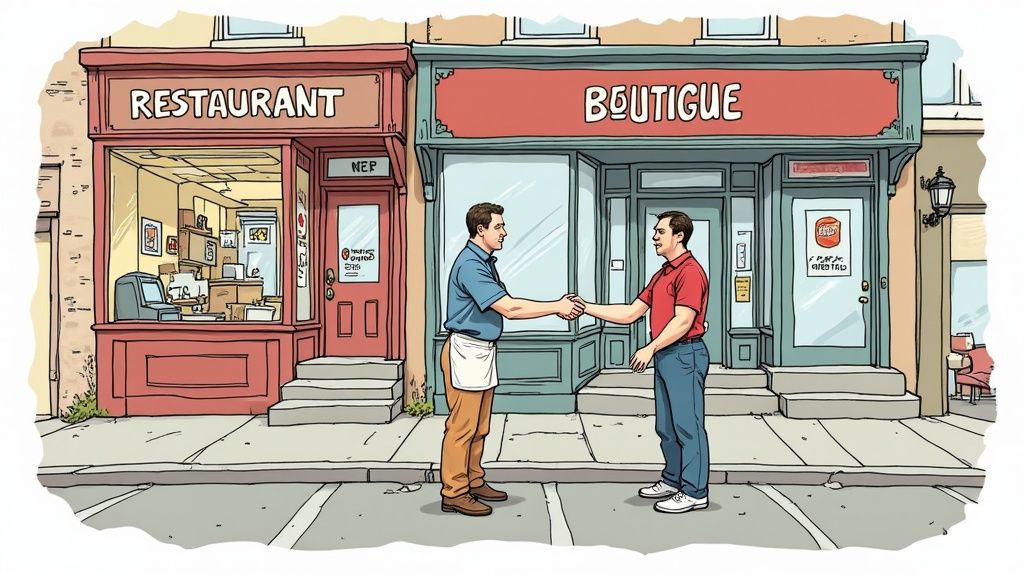
Some of the most effective marketing ideas for bars and restaurants extend beyond your own four walls. This strategy involves forming mutually beneficial alliances with complementary, non-competing local businesses to tap into their existing customer base. Through cross-promotion, you can expand your reach, build strong community ties, and share marketing costs, creating a win-win scenario for all parties involved.
These partnerships can take many forms, from co-hosting events to offering reciprocal discounts. Think of the classic dinner-and-a-show model, where a restaurant like NYC's Sardi's partners with nearby Broadway theaters for pre-show dining specials. This symbiotic relationship provides the theater with an enhanced guest experience and drives a reliable stream of targeted customers directly to the restaurant's door.
How to Implement This Strategy
Start by identifying potential partners in your immediate vicinity, such as hotels, corporate offices, gyms, or retail shops, whose customers align with your target demographic. Approach them with a simple, clear proposal that outlines the mutual benefits. For instance, a bar could offer a "show your ticket stub" discount for a local concert venue, while the venue promotes the bar as the official pre-game spot.
Creating unique discount codes or physical vouchers for each partner is crucial for tracking the ROI of each collaboration. Ensure that staff at both businesses are fully trained on the promotional details so they can confidently explain the offer to customers. This approach not only drives new traffic but also positions your establishment as an integral part of the local community ecosystem, a concept championed by initiatives like the American Express Shop Small program.
- Choose partners with a similar customer profile but different services.
- Start small with a trial promotion before committing to a long-term agreement.
- Create simple offers that are easy for both staff and customers to understand.
- Review performance quarterly to assess what's working and refine your strategy.
4. Loyalty & Rewards Program with Gamification
One of the most effective marketing ideas for bars and restaurants is to transform one-time visitors into regulars. A loyalty program with gamification elements does exactly that by rewarding repeat business in an engaging way. It moves beyond simple punch cards to create an interactive experience that boosts customer lifetime value, visit frequency, and average spending.
This strategy involves more than just discounts. It's about making customers feel valued and part of a community. Think of the Starbucks Rewards app, which uses points, tiers, and personalized challenges to keep millions of members engaged. These programs work by tapping into psychological triggers like achievement and exclusivity, making the act of earning rewards as exciting as the reward itself.
How to Implement This Strategy
Start by defining what you want to reward: visits, total spend, or specific item purchases. Make enrollment incredibly simple, requiring just a name and phone number or email to get started. Offering an instant reward for signing up, like a free drink or appetizer, immediately demonstrates the program's value and encourages participation from the outset.
Next, design a system that is both motivating and sustainable. Set redemption goals that typically require 5-7 visits to achieve, as this helps build a purchasing habit. To streamline the implementation of your loyalty program and enhance user experience, explore options for specialized restaurant loyalty applications that can manage points, send progress updates, and handle rewards automatically.
- Make it mobile-first: Use an app or text-based system instead of physical cards.
- Surprise and delight: Randomly gift loyal members a surprise reward to create memorable moments.
- Create exclusive tiers: Offer a top-tier status for your most valuable customers with special perks.
- Gather feedback: Use the program to survey members on what rewards they truly want.
By building a fun and rewarding loyalty experience, you create a powerful engine for customer retention. For more inspiration, explore these powerful customer loyalty program examples.
5. Google My Business Optimization & Local SEO
In today's digital landscape, one of the most critical marketing ideas for bars and restaurants is mastering your local online presence. This starts with your Google Business Profile (GBP), the cornerstone of local search engine optimization (SEO). When a potential customer searches "bars near me" or "best tacos in [your city]," a well-optimized GBP ensures you appear prominently in their search results and on Google Maps, driving direct foot traffic.
This strategy is about more than just existing online; it's about actively managing your digital storefront. Think of it as your virtual front door. A complete and active profile, rich with current information, high-quality photos, and positive customer reviews, builds trust and authority. Establishments like Joe's Stone Crab in Miami dominate local searches not by accident, but through a dedicated strategy of maintaining thousands of reviews and a detailed, engaging profile that answers customer questions before they even ask.
How to Implement This Strategy
First, claim and fully verify your Google Business Profile. Fill out every single section available, from business hours and address to accessibility information and menu links. Accuracy is paramount. Use high-quality photos to showcase your ambiance, food, and drinks, uploading new ones weekly to signal to Google that your profile is active and relevant. Regularly use the "Updates" feature to post about specials, events, or new menu items.
The next crucial step is managing reviews. Make it a policy to respond to every review, both positive and negative, within 24-48 hours. This engagement shows potential customers you value their feedback. Actively encourage satisfied guests to leave reviews by using a simple QR code on receipts or menus. This steady stream of feedback is a powerful signal to Google's algorithm.
- Claim and verify your profile immediately.
- Upload high-quality photos weekly to keep your listing fresh.
- Respond to every review to show you are engaged and value feedback.
- Use Google Updates 2-3 times per week to announce specials and events.
- Ensure your website is mobile-friendly and loads quickly.
"With 'near me' searches increasing over 200% in recent years, not optimizing your Google Business Profile is like having an unlisted phone number. You're invisible to the majority of your potential local customers."
By treating your Google Business Profile as an essential marketing channel, you directly influence how customers discover you. For a deeper dive into the principles behind this, you can learn more about what search engine optimization is.
6. Themed Events & Experiential Dining Nights
One of the most effective marketing ideas for bars and restaurants is to transform a standard visit into a memorable occasion. This strategy involves creating special, limited-time experiences that offer more than just food and drinks, generating excitement, attracting new demographics, and encouraging repeat business. These events can range from wine-pairing dinners and trivia nights to immersive, multi-sensory experiences.
This approach goes beyond simply offering a daily special. It's about building a destination and giving customers a compelling reason to choose your venue over competitors, especially on slower weeknights. Think of how Eataly hosts regional Italian cooking classes or how local pubs see a 40-60% increase in mid-week traffic by hosting a weekly trivia night. These aren't just promotions; they are community-building assets that create buzz and loyalty.
How to Implement This Strategy
To begin, identify your slowest night of the week and plan a single event to test the waters. Choose a theme that aligns with your brand’s identity and culinary strengths, such as a "Meet the Winemaker" dinner if you have a strong wine list or a guest chef collaboration to showcase culinary creativity. Ensure the event is priced to be more profitable per seat than a regular service, covering all additional costs for entertainment or special ingredients.
Next, promote the event aggressively starting 3-4 weeks in advance across all your channels: email newsletters, social media, and in-venue signage. Create a dedicated, easy-to-use online booking page with clear details on what the experience includes. Capturing attendee emails during booking is crucial for building a dedicated list for future event promotions, turning a one-time visitor into a regular attendee.
- Start small by hosting one event per month to gauge interest and refine your process.
- Partner with local businesses, entertainers, or brands to share promotional costs and audiences.
- Survey attendees after the event for feedback and to generate ideas for future themes.
- Photograph the event professionally and share the content to create FOMO (fear of missing out) for the next one.
By creating unique, experiential events, you give customers a new reason to visit and talk about your establishment. To see how these events can be woven into a larger strategy, explore these comprehensive restaurant marketing tactics.
7. Influencer Partnerships & Content Creator Collaborations
Harnessing the power of social proof, this strategy involves collaborating with food bloggers, local tastemakers, and content creators to generate authentic buzz. Instead of paying for traditional ads, you provide an experience in exchange for exposure to an influencer's dedicated, engaged audience. This is one of the most effective marketing ideas for bars and restaurants to build trust and reach new, highly targeted customers who rely on recommendations from people they follow.
This approach builds credibility in a way that self-promotion cannot. When a trusted local influencer like Keith Lee praises a restaurant, their followers listen. Similarly, when Dunkin' partnered with Charli D'Amelio to create a signature drink, it connected the brand with millions of Gen Z consumers almost overnight, demonstrating the massive potential of a well-aligned collaboration.
How to Implement This Strategy
Start by identifying local micro-influencers (10k-100k followers) whose audience demographics match your target customer. These creators often have higher engagement rates and a more authentic connection with their community than larger accounts. Before reaching out, vet their profile to ensure their aesthetic aligns with your brand and check for a healthy engagement rate, typically between 3-6%.
Once you've found a good fit, propose a collaboration. Often, this can start as a simple product-for-post exchange, inviting them for a complimentary meal. Set clear, written expectations about deliverables, such as the number of posts, stories, and required tags, but grant them creative freedom to ensure the content feels genuine to their audience. Providing a unique discount code for their followers is an excellent way to track the direct return on your investment.
- Focus on local micro-influencers for better ROI and a more geographically relevant audience.
- Negotiate content usage rights so you can repurpose their high-quality photos and videos on your own channels.
- Give influencers creative freedom to avoid content that feels like a scripted, inauthentic advertisement.
By building genuine relationships with content creators, you can turn their social influence into a consistent stream of new patrons. For more guidance on finding the right partners, explore platforms like Upfluence, which can help you discover and manage influencer relationships.
8. Happy Hour & Limited-Time Offer (LTO) Promotions
One of the most classic and effective marketing ideas for bars and restaurants is leveraging time-sensitive promotions to drive traffic during slower periods. This strategy creates urgency and provides a low-risk entry point for new customers. Happy hour targets specific times, like the post-work slump, while Limited-Time Offers (LTOs) generate buzz around unique, fleeting menu items.
These promotions are not just about discounts; they are powerful tools for managing customer flow and introducing your brand. Think of Applebee's famous 'Dollarita' promotion, which became a viral sensation, or the annual return of Starbucks' Pumpkin Spice Latte, which single-handedly drives significant fourth-quarter revenue. These campaigns create a "get it before it's gone" mentality that is incredibly effective at boosting sales.
How to Implement This Strategy
Start by analyzing your sales data to identify your slowest hours, typically between 3 PM and 6 PM on weekdays. This is your prime happy hour window. For LTOs, align your offerings with seasons, holidays, or local events to maximize relevance and appeal. The goal is to create promotions that are both exciting for the customer and profitable for your business.
Focus your discounts on high-margin items like draft beer, house wine, and appetizers rather than expensive entrees. This protects your bottom line while still offering perceived value. Promote your specials heavily across social media and through your email list at the beginning of the week to influence customers' plans. To learn more about building a customer database for these promotions, explore these strategies for collecting customer emails.
- Schedule strategically by creating a "reverse happy hour" (e.g., 9 PM to close) to attract a late-night crowd.
- Train staff to upsell full-priced items to happy hour guests, turning a small sale into a larger one.
- Track everything to ensure your promotional pricing is sustainable and profitable.
By mastering happy hour and LTOs, you can transform quiet periods into profitable revenue streams and create loyal customers who eagerly await your next special offer.
9. Community Engagement & Cause Marketing
Beyond transactional sales, one of the most resonant marketing ideas for bars and restaurants is embedding your establishment within the fabric of your local community. This strategy involves building authentic relationships by supporting local causes, participating in events, and aligning your brand with values that matter to your neighbors. By doing so, you transform your venue from just a place to eat and drink into a vital community hub.
This approach creates deep-seated loyalty and positive brand association that traditional advertising can't buy. Think of a local brewery sponsoring a youth soccer team or a cafe hosting a fundraiser for an animal shelter. These actions generate goodwill and media attention while demonstrating a genuine investment in the area's well-being, fostering an emotional connection with patrons that goes far beyond the menu.
How to Implement This Strategy
Start small by identifying local organizations, events, or causes that align with your brand's values. You could partner with a nearby charity and offer to donate a percentage of sales on a specific night, or set up a booth at a local food festival to introduce your offerings to a wider audience. Authenticity is key; choose causes you genuinely care about, as your passion will shine through and resonate more with customers.
Promote your community involvement actively on social media, in your email newsletters, and with in-store signage. When you sponsor a little league team, post a picture of the players in their jerseys at your restaurant. If you host a fundraiser, share the results and thank everyone who participated. This not only publicizes your efforts but also makes your customers feel good about supporting a business that gives back.
- Offer your space for local non-profit meetings or events on slower weeknights.
- Partner with local artists or musicians to host gallery nights or live music sessions.
- Source ingredients locally and highlight your partnerships with nearby farms and producers.
By championing community-focused initiatives, you build a powerful brand identity rooted in goodwill and shared values. This strategy cultivates a loyal customer base that chooses you not just for your food and drinks, but for what you stand for. For more ideas on building these connections, explore this guide on effective local restaurant marketing.
Marketing Ideas Comparison Matrix
| Strategy | Implementation Complexity | Resource Requirements ⚡ | Expected Outcomes | Ideal Use Cases | Key Advantages ⭐ |
|---|---|---|---|---|---|
| Instagram-Worthy Experiences & User-Generated Content Campaigns | Medium - requires initial investment in décor, training | Moderate - décor, ingredients, influencer outreach | High organic social reach, brand authenticity, repeat visits | Targeting Millennials/Gen Z, social media marketing | Low ongoing costs, strong social proof |
| Email Marketing with Segmented Lists & Personalization | Medium - needs list building and segmentation tools | Moderate - Email platform and content creation | High ROI, measurable engagement, customer retention | Personalized promotions, loyalty building | Direct owned channel, cost-effective |
| Strategic Partnership with Local Businesses & Cross-Promotion | Medium to high - relationship management and negotiation | Low to moderate - mainly time, shared marketing costs | Expanded reach, community ties, shared expenses | Local market expansion, slow period traffic | Access to new customers, reduced marketing costs |
| Loyalty & Rewards Program with Gamification | High - software setup, ongoing management | Moderate to high - software fees, rewards costs | Increased visit frequency, higher spend, customer data | Driving repeat visits, increasing customer lifetime value | Builds emotional loyalty, predictable revenue |
| Google My Business Optimization & Local SEO | Low to medium - setup and ongoing maintenance | Low - time investment for updates and monitoring | Higher local search visibility, increased foot traffic | Local customer acquisition, online orders | Free to implement, data-driven |
| Themed Events & Experiential Dining Nights | High - event planning, coordination, additional staffing | Moderate to high - costs for entertainment, supplies | Increased mid-week traffic, premium pricing, social buzz | Filling slow nights, creating shareable experiences | Higher per-guest spend, community building |
| Influencer Partnerships & Content Creator Collaborations | Medium to high - influencer vetting and relationship management | Moderate - compensation or product exchange | Access to engaged audiences, authentic content, social proof | Targeted marketing, brand awareness | Multi-platform reach, content creation |
| Happy Hour & Limited-Time Offer (LTO) Promotions | Low to medium - scheduling and promotion | Low to moderate - discounting margins | Increased traffic during slow periods, testing new items | Filling slow hours, introducing new customers | Drives routine visits, inventory movement |
| Community Engagement & Cause Marketing | Low to medium - planning and authentic engagement | Low to moderate - sponsorships, event hosting | Deep emotional loyalty, positive PR, community differentiation | Building brand values, long-term loyalty | Enhances reputation, employee morale |
From Ideas to Action: Crafting Your Marketing Menu
We’ve navigated a comprehensive menu of powerful marketing ideas for bars and restaurants, from mastering your digital storefront with Google My Business to building a loyal following through gamified rewards programs. The journey from a bustling list of concepts to a profitable, customer-drawing strategy can feel overwhelming, but the secret isn't to implement every single idea at once. Instead, the most successful approach is both strategic and selective.
Think of this list not as a checklist, but as a collection of ingredients. Your task now is to choose the ones that best complement your brand’s unique flavor, your target audience's appetite, and your operational capacity. The true power lies in the thoughtful execution of a few well-chosen initiatives rather than a scattered attempt at many.
Your Path to Sustainable Growth
The key takeaway is that consistency trumps intensity. A perfectly executed, Instagram-worthy themed event creates a memorable spike in business, but it's the steady, ongoing effort of a segmented email campaign or a meticulously managed local SEO presence that builds a resilient foundation for long-term success. The goal is to create a marketing ecosystem where each element supports the others. Your user-generated content campaign on social media feeds your email newsletter, which in turn promotes your next limited-time offer.
To begin, choose just two or three ideas from this article that genuinely excite you and align with your immediate goals.
- If your goal is immediate foot traffic: Focus on optimizing your Google My Business profile and launching a compelling Happy Hour promotion.
- If your goal is building a loyal community: Prioritize creating a rewarding loyalty program and engaging in authentic local partnerships.
- If your goal is enhancing brand awareness: Dive into influencer collaborations and invest in creating truly shareable, experiential dining nights.
Measure, Adapt, and Iterate
Once you’ve launched your chosen initiatives, the work isn’t over. Meticulously track your results. Did that influencer post drive reservations? Are customers redeeming their loyalty points? Is your Google My Business listing generating more calls? Use this data not as a final grade but as crucial feedback to refine your approach. Marketing in the hospitality industry is a dynamic process of listening, learning, and adapting.
By implementing these marketing ideas for bars and restaurants with intention and consistency, you move beyond simply selling food and drinks. You begin to build an experience, a community, and a destination. You are not just filling seats; you are creating a thriving establishment that becomes an essential, beloved part of your neighborhood’s fabric, ensuring guests return time and time again.
This article originally appeared on SharpeTools.com as part of the Bar Marketing 101 series.